
Desserts
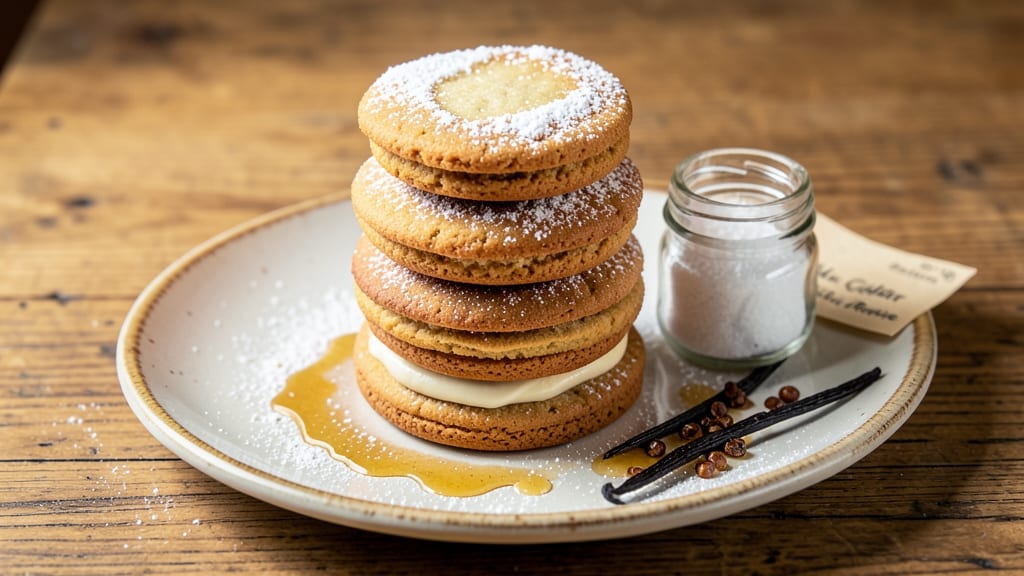
This cookie cottage sugar cookie recipe delivers the perfect balance of tender crumb and buttery richness, with a signature vanilla bean swirl that transforms ordinary cookies into showstopping treats.
The secret lies in a precise dough ratio—just enough butter for melt-in-your-mouth texture without losing structure—and a chilled resting period that ensures clean cuts and even baking.
I’ve perfected this recipe over years of holiday baking, where the difference between a good sugar cookie and a great one often comes down to patience and technique.
The dough comes together in 10 minutes, but the real magic happens during the 30-minute chill in the fridge. This step prevents spreading and allows for those coveted crisp edges while keeping the centers tender.
Once baked to a golden, crackly finish, the cookies develop that classic cottage-style texture—just firm enough to hold their shape but still soft enough to bite through easily. The vanilla bean swirl adds a luxurious touch that elevates these from basic sugar cookies to something truly special.
Assembling the sandwiches is where the fun begins. A creamy buttercream—lightened with whipped cream for a fluffy texture—binds two cookies together, while a drizzle of vanilla glaze adds a glossy finish. The result?
A cookie that’s rich, sweet, and perfectly balanced, with every bite offering that familiar comfort of a classic sugar cookie sandwich. These are the kind of cookies that disappear fast, whether you’re serving them at a holiday party or keeping them for your own midnight snack.
For those who love tradition, this recipe stays true to the cottage-style method, but it’s also adaptable—swap vanilla bean for almond extract, add sprinkles for fun, or make them gluten-free with a simple flour blend.
The key is in the details: room-temperature butter, precise measuring, and a hot enough oven to achieve that signature crack. Let’s make cookies that taste like home.
Ingredients for cookie cottage sugar cookie
Buttery dough, vanilla swirls, and creamy buttercream—these 13 ingredients transform simple sugar cookies into holiday showstoppers.
| Ingredient | Amount | Notes |
|---|---|---|
| All-Purpose Flour 🌾 | 4 cups | Sifted for light texture |
| Unsalted Butter 🧈 | 1 cup | Room-temperature, cubed |
| Granulated Sugar 🍚 | 1 ½ cups | Superfine preferred for smoothness |
| Cottage Sugar 🍚 | 1 cup | For signature texture |
| Vanilla Bean 🌿 | 1 whole | Seeds scraped for swirl |
| Large Eggs 🥚 | 2 whole | Room-temperature for blending |
| Vanilla Extract 🥄 | 1 tbsp | Pure, high-quality extract |
| Salt 🧂 | ½ tsp | Fine sea salt preferred |
| Baking Powder 🍞 | 1 tsp | Fresh for proper rise |
| Heavy Whipping Cream 🥛 | ½ cup | Cold for buttercream |
| Powdered Sugar 🍚 | 2 cups | Sifted for smooth buttercream |
| Vanilla Glaze 🍬 | ½ cup | Store-bought or homemade |
| Sprinkles 🎨 | ½ cup | Optional for decoration |
The butter is non-negotiable here—room-temperature is critical for even mixing. Plugrá or Land O’Lakes are reliable brands, but any unsalted works. For the cottage sugar, Bob’s Red Mill or Anthony’s Goods deliver the perfect texture. Vanilla bean? Madagascar Bourbon adds depth, but any quality bean will work. Sift your flour and powdered sugar—King Arthur or Gold Medal flours are my go-tos for consistent results. The dough needs to rest 30 minutes for clean cuts, so plan ahead.
No vanilla bean? Double the vanilla extract—it’s not ideal, but it works. Short on cottage sugar? Granulated sugar works in a pinch, though texture will differ slightly. For the buttercream, whipped cream instead of heavy cream lightens the texture beautifully. The glaze can be store-bought, but homemade (powdered sugar + milk + vanilla) is fresher. Sprinkles are optional, but Jolly Ranchers or sanding sugar add that classic touch. Pre-measure everything—this dough comes together fast, and you’ll want to roll it immediately after mixing.
Dough keeps 3 days in the fridge, wrapped tightly. For longer storage, freeze dough balls for up to 3 months. Buttercream stays fresh 5 days refrigerated, or 1 month frozen. Baked cookies? Air-tight container, room temp for up to 1 week. Pro tip: make extra dough—these disappear faster than you can bake them. Double the batch and freeze half for holiday gifting.
Why You'll Love This Recipe
- No Cream Cheese Needed: I swear by this trick—just butter, sugar, and flour. No extra mixing, no waiting for cream cheese to soften. The cottage sugar melts into the dough while you cream the butter, giving that signature tender crumb without the fuss.
- Buttery Vanilla Bomb: That split vanilla bean? Oh, it’s worth it. The seeds get distributed through the dough like little flavor bombs, and the butter—real unsalted butter—makes every bite taste like a hug from a bakery. (Yes, even when the cookies cool.)
- Holiday or Snack Attack: These work for Christmas cookies, lunchbox treats, or when you’re craving something sweet at 3 PM. Freeze half the dough, and you’ve got instant cookies for parties or lazy days. No last-minute stress.
- Pantry Staple Magic: You already have everything. Flour, sugar, butter—check, check, check. No weird ingredients or trips to the store. And the leftovers? They last days, not hours, because they’re sturdy enough for travel but still melt in your mouth.
Step-by-step instructions for creamy cottage sugar cookies
Here's how to craft these signature cookies with their signature creamy texture and vanilla swirls.
Cream Butter and Sugars Together
In a stand mixer fitted with the paddle attachment, beat the 1 cup unsalted butter on medium speed until completely smooth and creamy, about 2-3 minutes. This ensures even distribution of fat throughout the dough. Add the 1.5 cups granulated sugar and 1 cup cottage sugar all at once and continue mixing on medium speed for another 3-4 minutes.
The mixture should become light and fluffy, nearly doubling in volume. The cottage sugar is key here—it creates that signature tender, cake-like texture while the granulated sugar adds sweetness and structure. Scrape down the sides of the bowl occasionally to ensure even mixing.
Incorporate Eggs and Vanilla
Add the 2 whole large eggs, one at a time, mixing well after each addition. Then add the 1 tbsp vanilla extract and scrape the seeds from the 1 whole vanilla bean, adding them to the mixture. Mix on medium speed for another 1-2 minutes until fully combined and the batter is smooth.
This is where the vanilla flavor really develops. The seeds add beautiful flecks of color and depth that you won't get from extract alone. Make sure your eggs are at room temperature—they'll blend more smoothly and create a lighter texture in the final cookies.
Combine Dry Ingredients
In a separate bowl, whisk together the 4 cups all-purpose flour, 0.5 tsp salt, and 1 tsp baking powder. With the mixer on low speed, gradually add the dry ingredients to the wet mixture, mixing just until combined. Be careful not to overmix—you should still see some flour streaks in the dough.
Overmixing develops gluten, which makes cookies tough. The dough should be soft and slightly sticky but manageable. If it's too dry, add 1-2 teaspoons of heavy cream to help bind it together. Once combined, fold in the scraped vanilla bean pod (if desired) for additional visual appeal.
Chill the Dough
Divide the dough into two equal portions and flatten each into a ½-inch thick disk. Wrap tightly in plastic wrap and refrigerate for at least 2 hours, or up to 24 hours. Chilling is crucial—it firms up the butter, prevents excessive spreading, and allows the flour to fully hydrate for better texture.
This step also intensifies the flavors. The longer you chill the dough, the more pronounced the vanilla and sugar flavors will be. If you're short on time, you can chill the dough in the freezer for 30 minutes instead, but refrigerating gives the best results.
Bake the Cookies
Preheat your oven to 350°F and line two baking sheets with parchment paper. Roll out one chilled dough disk to ¼-inch thickness on a lightly floured surface. Cut out 2-inch rounds using a cookie cutter and transfer them to the prepared baking sheets, spacing them 2 inches apart. Repeat with the second disk.
Bake for 10-12 minutes until the edges are light golden brown and the centers still look slightly soft. They'll continue setting as they cool. For a perfect bake, rotate the baking sheets halfway through for even browning. Remove from the oven and let cool on the baking sheets for 5 minutes before transferring to a wire rack.
Assemble the Buttercream Sandwiches
While the cookies cool, prepare the buttercream by whipping the 0.5 cup heavy whipping cream, 2 cups powdered sugar, and 1 tbsp vanilla extract together until smooth and fluffy. Spread 1 tablespoon of buttercream onto the flat side of half the cookies. Top with the remaining cookies to create sandwiches.
For the signature swirls, pipe a small amount of buttercream onto each cookie before sandwiching, then gently twist the top cookie to create a decorative pattern. Dip the bottom edges of the cookies in 0.5 cup vanilla glaze and sprinkle with 0.5 cup sprinkles while the glaze is still wet for extra decoration.
Final Touches
Let the assembled cookies set for 10 minutes before serving. The buttercream should firm up slightly, making them easier to handle. These cookies are best enjoyed at room temperature, where the buttercream maintains its perfect creamy consistency.
Store any leftovers in an airtight container in the refrigerator for up to 5 days. Bring them to room temperature before serving to restore the creamy texture. The combination of the tender cottage sugar cookie, rich buttercream, and vanilla glaze makes these a true crowd-pleaser.
Pro Tips For Making Cookie Cottage Sugar Cookie
- CHILL THE DOUGH: After mixing, let the dough rest uncovered in the fridge for at least 2 hours—overnight is ideal. This isn’t just about flavor development; it’s the only way to prevent the cottage cheese from making your cookies spread into sad little pancakes. I used to skip it, and my cookies always looked like they’d been flattened by a steamroller.
- SCRAPE THE VANILLA: Don’t just eyeball the vanilla bean—split it lengthwise, scrape out every last bit of seeds, and toss the pod into the butter while it melts. The leftover pod adds depth, and the seeds prevent that "vanilla extract in a cookie" taste. I learned this the hard way after a batch tasted like I’d used half the bottle.
- WEIGH THE COTTAGE CHEESE: Drain the cottage cheese completely in a fine-mesh strainer for 10 minutes, then weigh it. The moisture content varies wildly between brands, and skipping this step turns your cookies into dense, chewy bricks. I now keep a small bowl in the fridge just for this—it’s a lifesaver.
- BAKE IN BATCHES: Preheat the oven to 350°F, but only bake one tray at a time. Cottage cheese cookies need space to puff, and crowding them makes them flatten and turn out gummy. If you’re impatient (like me), use a wire rack on the counter to cool them—they’ll crisp up faster than waiting on the baking sheet.
Wine and beer pairings for cookie cottage sugar cookie
Sweet Wine Pairings
For these rich, buttery sugar cookies, reach for a Moscato d'Asti or Riesling—their bright acidity and subtle sweetness cut through the buttercream without overpowering the vanilla.
I love a chilled Italian Moscato from Piedmont, especially during the holidays—it’s light enough to sip between bites but still complements the cookie’s texture beautifully. 🍷
Creamy Beer Options
A honey lager or wheat beer with vanilla notes is my go-to pairing. Try a Belgian-style witbier like Hoegaarden, which has a citrusy finish that refreshes your palate after each bite.
For a bolder option, a vanilla-infused stout (like Guinness) adds depth to the cookie’s sweetness. Serve the beer slightly chilled for the best contrast.
Spiced Rum Twist
If you’re serving these cookies at a party, pair them with a spiced rum cocktail—like a Vanilla Bean Old Fashioned made with bourbon, vanilla syrup, and a dash of cinnamon.
The warm spices echo the cookie’s vanilla swirls while the rum’s caramel notes enhance the buttercream. Garnish with a sprinkle of cinnamon for extra flair. 🍹
Coffee Balance
For a post-dinner pairing, a lightly roasted coffee (like a Sumatra Mandheling) balances the sweetness beautifully. The earthy, low-acid profile lets the cookie’s vanilla and buttercream shine. Brew it as a Viennese-style coffee with a splash of milk—it’s creamy enough to complement the cookies without competing.
Seasonal Adaptations
In summer, swap wine for a sparkling peach iced tea—its effervescence cleanses the palate between bites. For winter, a mulled wine (spiced with cinnamon and orange) warms up the cookie’s richness. I find that seasonal pairings elevate the cookie experience, making it feel like a true holiday treat. ❄️
Nutrition facts
Frequently asked questions
Why does this recipe use cottage sugar instead of regular sugar?
Cottage sugar creates that signature tender, cake-like texture these cookies are known for! Unlike granulated sugar, its coarse crystals dissolve slowly, keeping the cookies moist and preventing a dry crumb. The recipe balances it with granulated sugar for structure and sweetness—together they create the perfect bite.
Can I make these cookies without a vanilla bean?
Double the vanilla extract to 2 tablespoons for similar flavor depth. While you'll miss the beautiful flecks, the extract still delivers that classic vanilla aroma. For extra richness, add ½ teaspoon almond extract alongside it.
How do I prevent my cookies from spreading too much?
Chilling the dough for at least 2 hours is key—it firms up the butter and prevents spreading. Also use room-temperature butter (not melted) and bake at 350°F with a hot oven. For extra insurance, roll your dough to ¼-inch thickness and space cookies 2 inches apart on the sheet.
Can I make these gluten-free?
Yes! Replace the all-purpose flour with a 1:1 gluten-free flour blend (like Bob's Red Mill 1-to-1). Add ½ teaspoon xanthan gum if your blend doesn't contain it. Note that gluten-free cookies may spread slightly more—bake 1-2 minutes less than the recipe suggests.
How do I store leftover cookies?
Keep assembled cookies in an airtight container at room temperature for 3 days, or refrigerate for 5 days. For longer storage, freeze unbaked dough balls for 3 months1-2 minutes to baking time). Bring chilled cookies to room temp before serving to restore creamy texture.