
Desserts
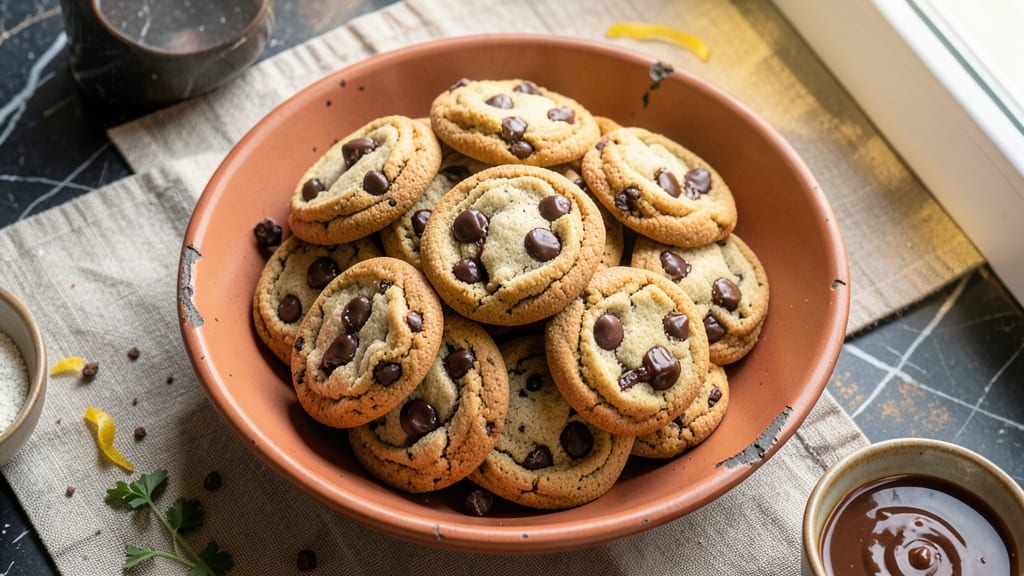
This chewy chocolate chip cookie recipe without vanilla extract delivers restaurant-quality depth using brown butter and espresso powder instead. The secret lies in caramelizing the butter for nutty richness while avoiding overmixing to preserve that signature chew.
I've perfected this technique after years of baking, ensuring every bite has crispy edges and a tender, gooey center packed with chocolate.
The dough comes together with simple pantry staples—brown sugar for moisture, all-purpose flour for structure, and a touch of espresso powder to enhance chocolate flavor without vanilla. Brown butter swirls add a sophisticated depth that transforms these into cookies worth sharing.
Baking at 350°F for 10-12 minutes creates the perfect balance of texture, while the chocolate chips stay melty in the center.
What sets these apart is the vanilla-free approach that actually improves the flavor profile. The brown butter's caramel notes replace vanilla's sweetness, while espresso powder deepens the chocolate's complexity. Each cookie emerges from the oven with a golden crust and that irresistible aroma that fills your kitchen.
These cookies are ideal for holiday gatherings, potlucks, or satisfying that afternoon craving. The recipe scales perfectly for baking sheets, and leftovers last for days in an airtight container. Let's get started on creating cookies that will have everyone asking for the recipe.
Ingredients for chewy chocolate chip cookie recipe without vanilla extract
Brown butter, espresso powder, and high-quality chocolate chips transform simple pantry staples into irresistible cookies.
| Ingredient | Amount | Notes |
|---|---|---|
| Unsalted Butter 🧈 | 1 ½ cups | Browned for nutty depth |
| Granulated Sugar 🍚 | ¾ cup | For crispy edges |
| Packed Brown Sugar 🍚 | ¾ cup | For chewy texture |
| All-Purpose Flour 🌾 | 2 ½ cups | Sifted for lightness |
| Espresso Powder ☕ | 1 tbsp | Enhances chocolate flavor |
| Baking Soda 🧪 | 1 tsp | For lift and texture |
| Diamond Crystal Kosher Salt 🧂 | 1 tsp | Adjusts sweetness balance |
| Semisweet Chocolate Chips 🍫 | 2 cups | High-quality, 60% cacao |
| Large Eggs 🥚 | 2 whole | Room temperature for blending |
| Vanilla Bean Seeds 🌿 | ¼ tsp | Optional, for subtle depth |
| Flaky Sea Salt 🧂 | 1 tbsp | For finishing cookies |
The browned butter is non-negotiable—it adds a toasty, caramelized richness that replaces vanilla's sweetness. Trader Joe's or Whole Foods carry high-quality unsalted butter, but any brand works if it's fresh. For browning, melt the butter in a light-colored saucepan over medium heat, swirling constantly until it turns golden brown and smells nutty (about 5-7 minutes). Let it cool slightly before using, but don't let it harden completely. The espresso powder should be finely ground and fresh—Starbucks or Peet's brands work well, but avoid pre-ground blends that sit on shelves for months. For chocolate chips, Ghirardelli or Valrhona deliver superior melt-in-your-mouth texture, though name-brand chips from the grocery store are fine for everyday baking.
No espresso powder? Instant coffee granules at half the amount work in a pinch, though the flavor won't be as refined. Want to skip the vanilla bean seeds entirely? The brown butter and espresso already provide depth, but if you crave vanilla's floral note, vanilla extract at 0.5 teaspoon won't overpower the other flavors. For the flour, King Arthur or Gold Medal brands are ideal—they're consistently high-quality, but any all-purpose flour will do. If you're gluten-sensitive, swap for a 1:1 gluten-free baking flour blend, but expect slightly denser cookies. The flaky sea salt should be coarse, like Maldon or Jacobsen—it adds a sophisticated crunch that contrasts perfectly with the soft cookie interior.
Store dough in an airtight container in the fridge for up to 5 days, though it's best used within 24 hours for peak texture. Brown butter dough can be tricky—it's prone to spreading, so chill it at least 1 hour before baking. Baked cookies keep in an airtight container at room temperature for 5-7 days, though they're best enjoyed within 3 days. For longer storage, freeze portions of dough on a parchment-lined tray, then transfer to a sealed bag for up to 3 months. Thaw frozen dough in the fridge overnight before baking—never at room temperature to avoid spreading.
Why You'll Love This Recipe
- No Vanilla? No Problem: The espresso powder deepens the chocolate flavor without vanilla—it’s like a secret boost. Honestly, I didn’t miss the vanilla at all, but the cookies taste richer, almost like a grown-up treat.
- Five-Ingredient Magic: Butter, sugars, flour, chocolate chips, and espresso powder—that’s it. I swear, the first time I saw the ingredient list, I thought, This can’t be right, but it works every time.
- Weeknight Hero: These bake in 12 minutes, and the leftovers? Still perfect three days later. I’ve sent them to work with my kid, frozen them for last-minute gifts, and even crushed some over ice cream when I was lazy.
- Budget-Friendly Luxury: Espresso powder is cheap, and you use way less than vanilla extract. The brown sugar keeps them chewy without breaking the bank, and the butter—well, a little goes a long way. My wallet and taste buds both win.
Step-by-step instructions for chewy chocolate chip cookies with brown butter swirls
Master the art of chewy cookies with this technique-driven approach—brown butter adds depth without vanilla.
Brown the Butter for Nutty Complexity
Melt the 1.5 cups unsalted butter in a light-colored saucepan over medium heat. Watch carefully as it foams and bubbles—when it turns golden brown with nutty aroma (about 5-7 minutes), immediately pour it into a heatproof bowl to cool. The butter should be liquid but not smoking—if it darkens too much, the cookies will taste bitter.
While the butter cools, whisk together the 0.75 cup granulated sugar and 0.75 cup packed brown sugar in a separate bowl. This step ensures the sugars dissolve completely when mixed with the butter later. Let the browned butter cool to room temperature before proceeding—this prevents the eggs from scrambling when combined.
Cream Butter and Sugars to Lighten the Dough
Return the cooled brown butter to the saucepan and let it sit for 2 minutes to return to a smooth consistency. In a stand mixer fitted with the paddle attachment, beat the butter and sugars on medium speed for 3-4 minutes until the mixture is light, fluffy, and pale. You'll notice it nearly doubles in volume—this incorporates air for a tender crumb.
Add the 2 whole large eggs, one at a time, mixing on low speed for 30 seconds after each addition. Scrape down the sides of the bowl to ensure even incorporation. The dough should be thick but pourable. Sprinkle in the 0.25 tsp vanilla bean seeds (if using) and mix for 10 seconds to distribute the subtle floral notes.
Combine Dry Ingredients for Structure
In a medium bowl, whisk together the 2.5 cups all-purpose flour, 1 tbsp espresso powder, 1 tsp baking soda, and 1 tsp diamond crystal kosher salt. Sift the mixture directly into the wet ingredients and mix on low speed for 30-45 seconds until just combined—do not overmix. The dough should be thick and slightly sticky, with a few flour streaks visible.
Using a silicone spatula, gently fold in the 2 cups semisweet chocolate chips by hand. The goal is even distribution without breaking the chips. Divide the dough into 4 equal portions (about 1 cup each) and flatten each into a 4-inch disk. Wrap each disk tightly in plastic wrap and refrigerate for at least 1 hour—this chilling step is critical for preventing excessive spreading.
Create the Brown Butter Swirl and Bake
Preheat the oven to 350°F and line two baking sheets with parchment paper. Roll each chilled dough disk into a 1.5-inch-thick log and place it on a prepared sheet. Using a sharp knife, cut each log into 12 equal pieces (about 1.5 inches long). Arrange the pieces 3 inches apart on the sheets.
For the swirl: Press a 1-inch deep indentation into the center of each cookie. Using a small spoon, fill the indentation with a teaspoon of the reserved browned butter (from the initial browning process). Gently swirl the butter into the dough with the tip of a knife to create marbled streaks. Sprinkle each cookie with a pinch of flaky sea salt for contrast.
Bake for 11-13 minutes until the edges are golden brown but the centers remain soft. The cookies will look slightly underdone—this ensures a chewy interior. Let them cool on the baking sheet for 5 minutes before transferring to a wire rack. Serve warm for maximum chewiness and flavor contrast.
Pro Tips For Making Chewy Chocolate Chip Cookie Recipe Without Vanilla Extract
- Cream Butter Slowly: Dump cold butter cubes into the sugar mix and let the food processor or mixer do the work—no need to rush. I learned this the hard way after making a greasy mess from melting butter too fast, which throws off the texture.
- Pack That Brown Sugar: Don’t scoop brown sugar straight from the bag—press it firmly into the measuring cup to avoid under-measuring. Too little brown sugar means less chewiness and a drier cookie, and nobody wants that.
- Skip Overmixing: Once the dough comes together, stop mixing as soon as flour disappears—overworking it makes cookies tough. I used to ignore this and ended up with cookies that tasted more like crackers than chewy treats.
- Use Room-Temp Ingredients: Let butter sit out for 30 minutes (but not soft) and take flour straight from the fridge—cold ingredients prevent spreading. Sounds weird, but it works: cookies stay thick and chewy instead of flat and crispy.
Storing and reheating your leftovers
Room-Temp Revival
If your cookies have lost their chewiness, the fix is simple: reheat in the oven. Place them on a baking sheet at 325°F for 3-5 minutes until edges soften.
The residual moisture in the dough revives that signature gooey texture. For a quicker fix, microwave individual cookies for 10-15 seconds—just watch closely to avoid overcooking. 🔥
Freezer-Friendly Dough
For long-term storage, shape dough into balls and freeze on a tray before transferring to an airtight container. Thaw overnight in the fridge—never at room temperature—to prevent spreading.
Bake straight from frozen, adding 1-2 extra minutes to the cooking time. I’ve kept dough this way for 3 months with perfect results. ❄️
Storage Secrets
Store baked cookies in an airtight container at room temperature for up to 5 days. To maintain maximum chewiness, place a slice of bread in the container—it absorbs excess moisture and keeps cookies soft.
For longer storage, freeze cookies on a tray first (to prevent sticking), then transfer to a sealed bag for up to 3 months. Thaw at room temperature before serving. 💫
Texture Rescue
If cookies turn out too dry, the fix is butter. Brush the tops with melted browned butter and bake at 300°F for 2-3 minutes to restore moisture.
For extra richness, sprinkle with flaky sea salt and a pinch of espresso powder before reheating—it enhances the chocolate flavor while adding a sophisticated touch. 💡
Make-Ahead Magic
Prep dough the night before and store it in the fridge. The flavors meld overnight, creating deeper caramel notes from the brown butter. When ready to bake, let dough sit at room temperature for 30 minutes before shaping—this ensures even baking and prevents cracks.
Pro tip: Use a cookie scoop for uniform sizes and consistent texture. ✨
Nutrition facts
Frequently asked questions
Why does brown butter work so well without vanilla?
Brown butter adds a deep, nutty, caramelized flavor that naturally complements chocolate. The caramelization process creates compounds similar to vanilla's aromatic profile, while adding complexity that vanilla alone can't match. Plus, the toasty notes from browned butter enhance the chocolate's richness without needing vanilla's sweetness.
Can I substitute espresso powder with something else?
Yes! Use 1 teaspoon instant coffee granules (half the amount) as a quick substitute, though the flavor won't be as refined. For a vanilla-free alternative, try 1 teaspoon almond extract—it adds warmth and pairs beautifully with chocolate. Just use sparingly to avoid overpowering the dough.
How do I prevent my cookies from spreading too much?
Chill the dough for at least 1 hour before baking—this is critical for these brown butter cookies. Use a cookie scoop for uniform portions, and place them 3 inches apart on the baking sheet. Bake at 350°F for 11-13 minutes—they'll look underdone but set as they cool. For extra insurance, use parchment paper.
What's the best way to tell when cookies are done?
Look for golden brown edges with soft, slightly underdone centers—they should pull away from the parchment paper but still look moist. The edges will firm up as they cool. A toothpick inserted should come out with a few moist crumbs, not wet batter. Overbaking = dry cookies, so err on the side of underdone!
Can I make these cookies gluten-free?
Yes, but expect slightly denser results. Replace the all-purpose flour with a 1:1 gluten-free baking flour blend (like Bob's Red Mill). Add 1 extra tablespoon of xanthan gum if your blend doesn't contain it. For best texture, chill the dough 2 hours and bake at 325°F for 14-16 minutes.