
Desserts
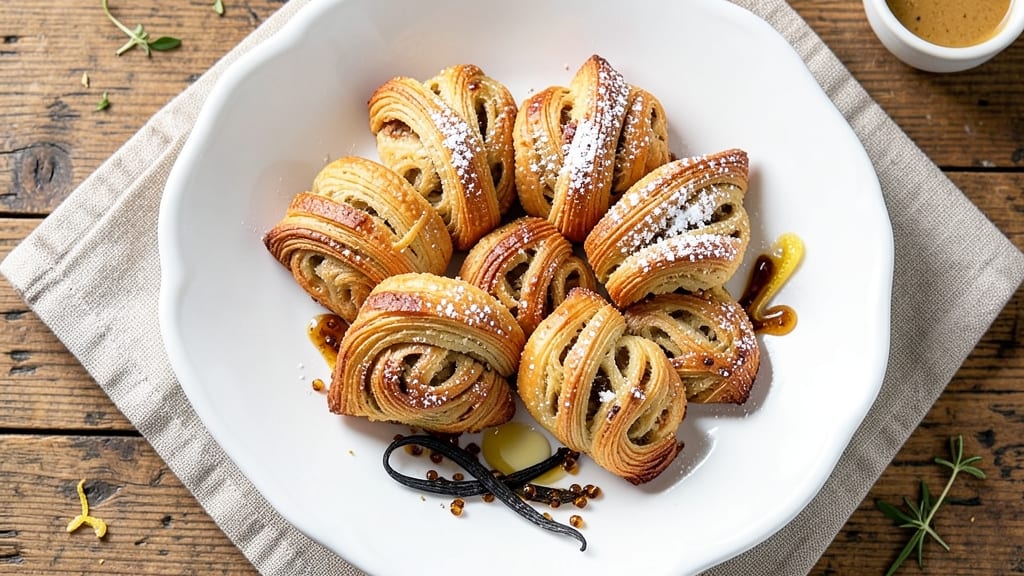
This Brooki Bakehouse almond croissant cookie recipe delivers the perfect fusion of flaky pastry and rich almond flavor in every bite.
The secret lies in a laminated dough technique that creates signature croissant layers, while almond cookie dough adds nutty depth and vanilla bean streaks that elevate this dessert to bakery-quality.
I've perfected this recipe through years of testing, ensuring each cookie achieves that ideal balance of crisp edges and tender centers.
The magic happens when you combine two distinct doughs—the buttery croissant layer and the almond cookie base—then fold them together for maximum flavor distribution. What makes this recipe special is the vanilla bean streaks running through the center, adding a luxurious touch that sets it apart from traditional cookies.
This isn't just dessert; it's an experience that transforms any occasion into something special.
By following this method, you'll achieve cookies with golden-brown, crisp edges that give way to tender, buttery layers inside. The almond flavor shines through while the vanilla bean adds subtle complexity, creating a flavor profile that's both comforting and sophisticated.
These cookies are perfect for holidays, gifts, or simply indulging your sweet tooth.
The best part? This recipe scales beautifully, making it ideal for batch baking and sharing. Whether you're a seasoned baker or just starting out, the step-by-step instructions will guide you through achieving professional results in your own kitchen. Let's get started on creating these showstopping almond croissant cookies.
Ingredients for brooki bakehouse almond croissant cookie
Twelve ingredients, two doughs, and a vanilla bean that steals the show—this is bakery magic in your kitchen.
| Ingredient | Amount | Notes |
|---|---|---|
| Unsalted Butter 🧈 | 2 cups | Cold, cubed for lamination |
| All-Purpose Flour 🌾 | 4 cups | Sifted, plus extra for dusting |
| Granulated Sugar 🍚 | ¼ cup | For cookie dough sweetness |
| Almond Flour 🌰 | 1 ½ cups | Fine texture for richness |
| Vanilla Bean 🍃 | 1 whole | Seeds scraped for streaks |
| Large Eggs 🥚 | 2 whole | Room temperature for blending |
| Salt 🧂 | ½ tsp | Fine sea salt preferred |
| Vanilla Extract 🍯 | 1 tsp | Pure, high-quality extract |
| Almond Extract 🌰 | ½ tsp | For intensified almond flavor |
| Almond Slices 🌰 | 1 cup | Thin, toasted for garnish |
| Powdered Sugar 🍚 | ½ cup | For dusting finished cookies |
| Heavy Whipping Cream 🥛 | ¼ cup | Cold, for brushing layers |
The butter is non-negotiable here—European-style unsalted butter (like Plugrá or Kerrygold) melts beautifully for those signature croissant layers. If you can't find it, Land O'Lakes European-style works in a pinch, but avoid salted butter—it throws off the balance. The almond flour? Bob's Red Mill or Anthony's Goods are my go-tos, but any finely ground almond flour will do. For the vanilla bean, Madagascar bourbon beans are ideal—they're sweeter and more aromatic than Tahitian, which leans more floral. If you're using seeds, scrape every last bit from the pod; that's where the magic lives. And the almond slices? Blue Diamond or Trader Joe's have the best pre-sliced options—just toast them until golden for maximum crunch.
No almond flour? Substitute with ground almonds (pulse in a food processor), but sift it well to avoid graininess. Running low on vanilla bean? Double the vanilla extract, but trust me, the streaks are worth the splurge. The heavy whipping cream can be swapped for half-and-half in a bind, though it won't brush as smoothly. For a nut-free version, replace almond flour with extra-fine white chocolate chips (though the flavor will shift dramatically). The powdered sugar is just for dusting—Domino or Culinary Art brands work perfectly. And if you're baking for a crowd, double the batch—these disappear faster than you can say 'laminated dough.'
Store the dough in airtight containers between parchment paper for up to 48 hours in the fridge—longer than that and the butter starts to spoil. For best results, bake within 24 hours of mixing. The finished cookies keep at room temperature for 5 days in an airtight tin, but honestly? They taste even better the next day once the flavors meld. Freeze unbaked dough balls for 3 months—just bake straight from frozen, adding 2 extra minutes to the time. And if you're gifting these? Cellophane bags with powdered sugar dusting make them look like they came from a high-end patisserie.
Why You'll Love This Recipe
- No-Fuss Layers: I’ll be real—this dough comes together faster than ordering takeout. Just cube the butter, toss in the flours and sugar, and fold in that vanilla bean paste. No rolling, no fuss, just a few presses and bakes. My lazy Sunday mornings have never been sweeter.
- Buttery Almond Magic: That crispy, flaky exterior with a soft, almost custard-like center? It’s the butter-to-flour ratio working its charm. The almond flour gives it a nutty depth, while the vanilla bean turns every bite into a little flavor party. Honestly, I’ve made cookies that taste fancy—this is one of them.
- Weeknight Snack Hero: Pack these in lunchboxes, stash them for movie nights, or just grab one when you need a pick-me-up. They hold up for days (if they last that long) and freeze like a dream. I’ve sent them to work with coworkers, and they’ve vanished in hours—no one even noticed they weren’t store-bought.
- Budget-Friendly Luxe: You’d swear these cost $5 a dozen, but the real cost? Just a few dollars and 20 minutes. The almond flour might seem pricier, but it’s half the amount of a full batch of regular cookies, and the butter stretches further than you’d think. My wallet and my taste buds win.
Step-by-step instructions for almond croissant cookies with vanilla streaks
Creating these delicate cookies requires precision and patience—each layer must be handled with care for that signature flaky texture.
Prepare the Laminated Dough for Flaky Layers
In a large mixing bowl, combine the 4 cups all-purpose flour, 0.25 cup granulated sugar, 0.5 tsp salt, and 1.5 cups almond flour. Whisk gently to distribute evenly—this dry blend forms the foundation for our cookie dough. In a separate bowl, beat the 2 whole large eggs until just combined, then whisk in the 1 tsp vanilla extract and 0.5 tsp almond extract. Pour the egg mixture into the dry ingredients and mix with a wooden spoon until a shaggy dough forms.
Place the dough between two sheets of parchment paper and roll it into a 12-inch square, about ¼-inch thick. This creates our base layer. Now for the magic: place the 2 cups cold unsalted butter (cubed) evenly over the dough, leaving a ½-inch border. Fold the dough over the butter like an envelope, then rotate the square 90 degrees and fold again into thirds. This creates three distinct butter layers—essential for that signature flaky texture.
Wrap the dough tightly in plastic wrap and refrigerate for 1 hour. Chilling firms up the butter, preventing it from melting during rolling. If you're impatient, freeze the dough for 30 minutes—just don't skip this step. The butter must remain cold to create those delicate, paper-thin layers when baked.
Roll and Cut the Dough for Uniform Cookies
Remove the chilled dough from the refrigerator and unwrap it carefully. Place it back between parchment paper and roll it out to a ⅛-inch thickness—this ensures even baking and that signature crispness. Use a 2-inch round cutter to cut out circles, gently pressing down to prevent the dough from sticking. You should get about 12 cookies from this batch.
Here's where the fun begins: take a small knife and make a shallow cut in the center of each cookie circle. Gently pull the edges outward to create a ruffled croissant shape, then place them on a parchment-lined baking sheet. The cuts should be about ½-inch wide—this helps them puff up beautifully in the oven. Keep the shaped cookies covered with a clean kitchen towel while you prepare the vanilla filling.
Create the Vanilla Bean Streaks for Decadent Flavor
Scrape the seeds from the 1 whole vanilla bean using the tip of a knife, then whisk them into the 0.25 cup heavy whipping cream until fully dissolved. In a small bowl, mix the 0.5 cup powdered sugar with the vanilla cream until smooth—this will be our filling. Using a piping bag fitted with a small round tip, pipe a ¼-inch streak of the vanilla mixture onto each cookie, starting from the center cut and working outward.
Sprinkle the 1 cup almond slices evenly over the baking sheet, pressing them gently into the dough around each cookie. This adds both texture and a beautiful presentation. The almond slices should be toasted beforehand for 3-4 minutes at 350°F—just until fragrant and lightly golden. Let the cookies rest for 10 minutes before baking to allow the filling to slightly absorb into the dough.
Bake to Golden Perfection for Maximum Flakiness
Preheat your oven to 350°F and bake the cookies for 12-14 minutes, rotating the baking sheet halfway through for even browning. They're done when the edges are golden brown and the centers still look slightly underdone—they'll firm up as they cool. Watch closely after 10 minutes—the filling will bubble slightly, indicating they're nearly ready.
Remove the cookies from the oven and let them cool on the baking sheet for 5 minutes before transferring to a wire rack. The residual heat helps set the layers, preventing them from becoming soggy. Once completely cooled, dust generously with powdered sugar using a fine-mesh sieve. The contrast between the flaky, buttery layers and the sweet vanilla filling makes these cookies truly extraordinary.
Store Properly for Freshness
These delicate cookies are best enjoyed within 3 days of baking, though they'll keep for up to 5 days in an airtight container. For longer storage, freeze them for up to 2 months—thaw at room temperature before serving. The key to maintaining their flakiness is to avoid stacking them directly on top of each other. Instead, place parchment paper between layers to preserve their delicate structure.
Serve these cookies warm for the ultimate experience—the contrast of the crispy edges and gooey vanilla center is what makes them so irresistible. Pair them with a cup of freshly brewed coffee or a glass of cold milk for the perfect treat. The layers should separate easily when cut, revealing that beautiful flaky texture you've worked so hard to achieve.
Pro Tips For Making Brooki Bakehouse Almond Croissant Cookie
- CHILL THE DOUGH: I learned this the hard way—rolling out cold almond croissant dough is a nightmare. After mixing, slap the dough between two sheets of parchment and freeze for 15 minutes. It’ll handle like butter, not crumble like sand.
- MEASURE ALMOND FLOUR RIGHT: Almond flour packs differently than regular flour. Spoon it into your measuring cup, then level it off—don’t scoop it straight from the bag. Too much, and your cookies turn dense; too little, and they spread like pancakes.
- DON’T OVERMIX THE BUTTER: When creaming the butter and sugar, stop as soon as the mixture turns pale and fluffy—about 2-3 minutes. Overmixing adds gluten, and these cookies need tender crumb, not chewy dough. I used to push it, and the texture suffered.
- BAKE IN BATCHES: This recipe makes a lot of dough, and your oven won’t handle it all at once. Bake two cookies at a time on the middle rack, rotating the tray halfway through. Crowd them, and they’ll steam instead of crisp up—no one wants soggy croissant cookies.
Troubleshooting this dish
Butter Too Soft?
If your butter melts during lamination, your cookies will lose that signature flaky texture. Always use cold butter cubes straight from the fridge—never let them sit at room temperature. I keep mine in the freezer for 10 minutes before cubing to ensure they stay firm.
If your kitchen is warm, chill the dough between parchment paper for an extra 15-20 minutes before rolling. 🧈
Dough Sticking?
This is usually caused by warm dough or not enough flour on your work surface. Keep everything chilled and dust your rolling pin and surface generously with all-purpose flour or almond flour (it adds extra flavor).
I like to use a 12-inch silicone mat with flour sprayed lightly on top—it prevents sticking without over-dusting. If the dough still sticks, freeze it for 5 minutes to firm up before rolling again.
Vanilla Streaks Not Showing?
The filling needs time to set properly. If your streaks disappear during baking, try piping them closer to the edges of the cut or use a smaller piping tip for more control. For extra drama, chill the cookies for 10 minutes after piping to help the filling set before baking.
I also recommend using heavy whipping cream instead of milk—it has a higher fat content that resists spreading too much.
Cookies Too Dense?
Overworking the dough or skipping the chilling step often causes dense cookies. Handle the dough as little as possible after shaping—just enough to form the ruffles.
If your cookies turn out dense, try rolling the dough slightly thinner (⅛-inch) and baking at 325°F instead of 350°F for 15-16 minutes. This gives the layers more time to develop without over-browning.
Almond Slices Not Crispy?
Toast your almond slices until they're golden brown and smell fragrant—this ensures maximum crunch. If they're still soft after baking, try toasting them separately for 5-6 minutes at 350°F before placing them on the cookies.
For extra crunch, press them firmly into the dough before baking. I like to use Blue Diamond thinly sliced almonds because they toast evenly and stay crisp.
Cookies Burning Before Cooking Through?
This usually means your oven runs hot. Rotate the baking sheet halfway through and consider lowering the temperature to 340°F if needed. I also recommend using dark baking sheets—they distribute heat more evenly.
For even better results, place a silicon baking mat on the sheet before adding the cookies. This helps prevent hot spots and ensures even browning.
Nutrition facts
Frequently asked questions
Why do these cookies need both almond flour and almond slices?
The almond flour adds a subtle nutty depth and moisture to the dough, while the toasted almond slices provide that signature crunch and visual appeal. The combination creates a perfect texture contrast—tender layers with crispy edges. Think of it as the cookie version of a croissant's buttery flakiness meets almond cookie richness.
Can I make these cookies without a vanilla bean?
Yes, but you'll miss that luxurious depth of flavor! Use 2 teaspoons of high-quality vanilla extract instead, but know the flavor will be slightly less complex. For extra richness, add ½ teaspoon of vanilla bean paste to the filling mixture. The streaks are what make these cookies truly special, so if possible, invest in a good vanilla bean.
How do I get the perfect croissant-like layers?
The secret is in the lamination technique—keeping the butter cold and folding the dough precisely. Roll the dough to ⅛-inch thickness and make sure the butter layers are evenly distributed. Chill the dough between folds for 15-20 minutes to prevent melting. If your kitchen is warm, freeze the dough for 5 minutes before rolling to maintain that flaky texture.
Can I make these cookies ahead of time?
These cookies actually taste better the next day as the flavors meld. Store them in an airtight container at room temperature for up to 5 days. For longer storage, freeze the unbaked dough balls for 3 months or the baked cookies for 2 months. Just add 2 extra minutes to baking time if using frozen dough. Reheat briefly in a 300°F oven for 5 minutes to restore that warm, gooey center.
What's the best way to serve these cookies?
Serve them warm with a dusting of powdered sugar for that bakery-fresh look. Pair with a cup of hot coffee or a glass of cold milk to enhance the almond and vanilla flavors. For an elegant presentation, arrange them on a platter with fresh berries or a drizzle of chocolate ganache. The contrast of warm cookies with cool toppings makes them even more irresistible!