
Desserts
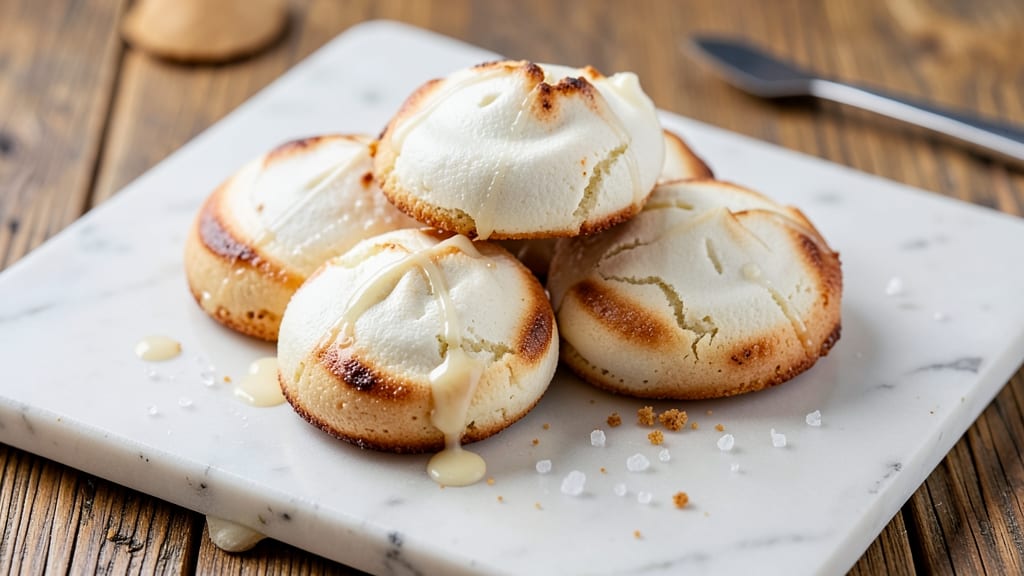
This chewy meringue cookie recipe delivers the perfect balance of pillowy centers and sandpaper crunch—a texture that’s impossible to resist. 💛 The secret lies in French meringue technique, where whipped egg whites and hot sugar syrup create a stable base that holds its shape while baking into chewy perfection.
I’ve perfected this recipe over countless batches, ensuring every cookie has that signature caramelized exterior and tender, melt-in-your-mouth interior.
What sets these cookies apart is the two-stage baking process: first, a low oven temperature to set the meringue gently, then a higher heat to develop that signature crunch.
No special equipment is needed—just a stand mixer (or hand whisk) and patience for the syrup to cool to room temperature. The result? Cookies that stay soft for days, with edges that crackle like sandpaper when you bite in.
Each batch yields about 24 cookies, perfect for sharing or stashing in an airtight container. The aroma of vanilla and toasted sugar fills the kitchen as they bake, and the contrast of textures—crispy shell, chewy middle—makes them a showstopper for holidays or casual gatherings.
Trust me, once you try these, you’ll never buy store-bought meringue cookies again.
The key to success? Room-temperature ingredients and precise timing—no rushing the syrup or overmixing the whites. With this recipe, you’ll achieve restaurant-quality results that taste even better the next day. Let’s get baking!
Ingredients for chewy meringue cookie
Room-temperature ingredients and French meringue technique transform simple pantry staples into irresistible cookies with signature crunch and chewy centers.
| Ingredient | Amount | Notes |
|---|---|---|
| Large Egg Whites 🥚 | 5 whole | Room temperature, no yolks |
| Granulated Sugar 🍚 | 1 ½ cups | Superfine preferred for smooth texture |
| Water 💧 | ¼ cup | For sugar syrup |
| Unsalted Butter 🧈 | 1 cup | Cold, cubed, full-fat preferred |
| Pure Vanilla Extract 🌿 | 1 tbsp | High-quality, no imitation |
| Diamond Crystal Kosher Salt 🧂 | ½ tsp | Fine grain for even distribution |
| All-Purpose Flour 🌾 | 2 cups | Sifted, room temperature |
| Cornstarch 🌾 | 1 tbsp | For extra chewiness |
| Baking Soda 🧪 | ¼ tsp | Freshly opened |
| Vanilla Bean Seeds 🌿 | 1 tsp | Scraped from 1 pod (optional) |
| Toasted Almond Slices 🌰 | ½ cup | For garnish (optional) |
The egg whites are non-negotiable—room temperature is critical for proper volume. I always use pasteurized whites from the grocery store (the carton kind) for consistency, but fresh works too if you're patient. Sugar quality matters: superfine sugar dissolves faster, but regular granulated works if pulsed in a food processor. For the butter, European-style (like Plugrá) has higher fat content and gives a richer texture. I buy mine in 1-pound blocks from specialty stores—it's worth the splurge for this recipe.
No vanilla extract? Vanilla bean paste works perfectly—just use the same amount. Short on almond slices? Toasted pecans or walnuts add a nice crunch. The sugar syrup is the magic—don't rush it. Let it cool to room temperature before folding into the meringue, or you'll deflate all that hard work. For the flour, sift it with the cornstarch and baking soda together to avoid lumps. Pro tip: Weigh your ingredients if you can—volume measurements can vary wildly with these delicate dry goods.
Meringue cookies keep best in an airtight container with parchment between layers—prevents sticking and sogginess. They'll stay fresh for about 5 days at room temperature, but honestly? They taste even better the next day once the textures fully develop. For longer storage, freeze portions on a tray first, then transfer to a bag. 3 months in the freezer with no texture loss. The almonds? Toast them fresh before garnishing—5 minutes at 350°F brings out their flavor perfectly.
Why You'll Love This Recipe
- I swear by this combo: egg whites, sugar, and butter. That’s it—no flour, no fuss. Whip the whites to stiff peaks, fold in the sugar, and let the oven do the magic. It’s the kind of recipe where you won’t believe how little you need to start.
- Three-Ingredient Core: I swear by this combo: egg whites, sugar, and butter. That’s it—no flour, no fuss. Whip the whites to stiff peaks, fold in the sugar, and let the oven do the magic. It’s the kind of recipe where you won’t believe how little you need to start.
- Butter’s Secret Boost: Here’s what sold me—the cold butter cut into the meringue before baking. It melts into those pockets, making every bite ridiculously chewy and rich. No one will guess it’s just five ingredients doing all the work.
- Holiday or Snack Attack: I’ve made these for Christmas cookie platters, but they’re just as happy on a Tuesday afternoon. The vanilla extract shines bright enough for company, yet they disappear faster than store-bought when I’m craving something sweet.
Step-by-step instructions for chewy meringue cookies
Here's how to create those iconic chewy meringue cookies with crisp edges and cloud-like centers.
🍳 Step 1: Whip Egg Whites to Stiff Peaks
In a spotlessly clean, grease-free mixing bowl, combine the 5 whole Large Egg Whites and place it in the refrigerator for 10 minutes to chill slightly. This helps stabilize the proteins for better volume. Remove the bowl and attach the whisk attachment to your stand mixer.
Whip the egg whites on low speed until foamy, then gradually increase to high speed. After about 2 minutes, you'll see soft peaks form when the whisk is lifted. Continue whipping until the meringue is glossy and holds firm peaks—the tips should stand straight up without collapsing. This can take 5-7 minutes total. Avoid over-whipping or the meringue will become grainy.
I like to test the meringue by lifting the whisk—if the peak holds its shape and doesn't flatten immediately, it's ready. The temperature should be around 75°F—if it feels warm to the touch, place the bowl back in the fridge for 5 minutes to cool slightly.
👨🍳 Step 2: Prepare the Sugar Syrup
In a heavy-bottomed saucepan, combine the 1.5 cups Granulated Sugar and 0.25 cup Water. Place over medium-high heat and bring to a boil without stirring. Let it boil vigorously until it reaches 238-240°F on a candy thermometer—this is the soft-ball stage. The syrup should look like thick honey and form soft balls when dropped into cold water.
While waiting, prepare an ice bath by filling a large bowl with ice and water. Once the syrup reaches temperature, immediately remove it from heat and carefully pour it into the meringue in a slow, steady stream. Use a silicone spatula to gently fold the syrup into the meringue from the bottom up, incorporating it completely.
Here's the thing—this step needs precision. If you add the syrup too quickly, the meringue will collapse. If you fold too vigorously, you'll deflate the air bubbles. Work gently but thoroughly until the mixture is smooth and the sugar is fully dissolved.
🍳 Step 3: Incorporate Butter and Flavorings
Add the 1 cup Unsalted Butter (cut into small cubes) to the meringue mixture. Using a silicone spatula, gently fold the butter in until fully incorporated. The mixture will look slightly curdled at first, but keep folding until it becomes smooth and creamy—this can take 3-5 minutes of careful work.
Add the 1 tbsp Pure Vanilla Extract, 0.5 tsp Diamond Crystal Kosher Salt, and 1 tsp Vanilla Bean Seeds (if using). Fold these in until evenly distributed. The dough should be thick, glossy, and hold its shape when spooned—if it's too soft, chill it for 15 minutes before proceeding.
This is where the magic happens. The butter adds richness and chewiness, while the vanilla and salt enhance the flavor. Don't rush this step—proper incorporation ensures those perfect pillowy centers and crisp edges.
👨🍳 Step 4: Mix Dry Ingredients and Combine
In a separate bowl, whisk together the 2 cups All-Purpose Flour, 1 tbsp Cornstarch, and 0.25 tsp Baking Soda. Sift the mixture to aerate the flour and prevent dense cookies. Gently fold the dry ingredients into the meringue mixture using a spatula, mixing just until combined. Be careful not to overmix—you're looking for a smooth, slightly sticky dough that holds together when pressed.
If the dough feels too dry, add 1-2 teaspoons of water to help bind it. The texture should be soft but manageable, like thick cookie dough. At this point, you can press the dough between plastic wrap to flatten it slightly, making it easier to portion later.
⏰ Step 5: Chill, Portion, and Bake
Cover the dough with plastic wrap and refrigerate for at least 2 hours (or up to 24 hours). Chilling is crucial—it allows the gluten to relax, preventing excessive spreading in the oven. The dough should be firm but still pliable when you're ready to bake.
Preheat your oven to 350°F and line two baking sheets with parchment paper. Using a 2-tablespoon cookie scoop, portion the dough into balls and place them 3 inches apart on the prepared sheets. For extra crunch, press the 0.5 cup Toasted Almond Slices gently into the tops of half the cookies (if using).
Bake for 12-14 minutes until the edges are golden brown and the centers still look slightly underdone. They'll continue cooking on the hot sheet. Let the cookies cool on the baking sheet for 5 minutes before transferring to a wire rack to cool completely. The centers should be soft and chewy, while the edges have that satisfying sandpaper crunch.
Pro Tips For Making Chewy Meringue Cookie
- Use Room-Temp Egg Whites: Cold egg whites hide tiny water droplets that make meringue floppy. Let them sit in a bowl for 30 minutes before whipping—your cookies will hold their shape and chew better. (I used to skip this and wondered why mine collapsed like sad soufflés.)
- Whip Sugar Gradually: Dump all the sugar at once? You’ll end up with a grainy mess. Add it in two batches—first half to stiff peaks, then the rest—so the butter and vanilla mix in smoothly. This keeps the texture silky, not gritty.
- Chill Dough 24 Hours: Skip the overnight rest, and your cookies spread into sad pancakes. Cover the dough and refrigerate—hydration evens out, and the sugar dissolves properly. (Yes, even if you’re impatient like me.)
- Bake at 325°F, Not Higher: Cranking the oven to 350°F will brown the edges before the centers set, leaving you with crispy shells and undercooked centers. 325°F gives steady, even baking—no surprises, just chewy perfection.
Creative variations of this dish
Classic French Meringue
The original recipe uses French meringue, where egg whites are whipped to stiff peaks before being folded into a hot sugar syrup. This method creates a stable structure that holds its shape beautifully.
I find the 238-240°F soft-ball stage for the syrup is crucial—any lower and the meringue won't set properly, any higher and it risks burning. The key is patience: let the syrup cool to room temperature before folding, or you'll deflate all that hard work. 💫
Italian Meringue Shortcut
For a faster version, try Italian meringue where hot sugar syrup is poured directly into the egg whites while whipping. This requires a candy thermometer and precise temperature control, but it eliminates the risk of collapsing meringue.
I've found Pillsbury Italian Meringue Powder works well too—just mix it with water and fold it into the whipped egg whites. The texture is slightly denser but still delivers that signature chew.
Brown Butter Twist
Swap out regular butter for brown butter to add a nutty, caramelized depth. Cook the butter until it turns golden brown and smells amazing (about 5-7 minutes at 350°F), then let it cool completely before folding into the meringue.
The flavor is richer, and the cookies develop a beautiful toasted hue. I like to use European-style butter like Plugrá for the best results—it has higher fat content that stands up to the browning process.
Citrus Zest Variations
Brighten up the classic flavor with 1 teaspoon of lemon or orange zest folded into the meringue mixture. The citrus cuts through the sweetness beautifully and adds a refreshing twist. I've had great success with Meyer lemon zest—it's sweeter and more aromatic than regular lemons.
For a tropical variation, add ½ teaspoon of grated lime zest along with 1 teaspoon of lime juice when incorporating the flavorings.
Spiced Chai Version
Create a cozy chai-inspired variation by adding ½ teaspoon of ground cinnamon, ¼ teaspoon of ground cardamom, and ¼ teaspoon of ground ginger to the dry ingredients. For extra warmth, fold in 1 teaspoon of chai spice blend with the vanilla.
The spices complement the buttery richness perfectly, making these cookies ideal for fall gatherings. I like to toast the spices lightly in a dry pan for 30 seconds to enhance their aroma before adding them to the dough.
Double Chocolate Upgrade
For chocolate lovers, fold ½ cup of chopped dark chocolate (60-70% cocoa) into the meringue mixture along with the butter. For an extra decadent version, replace half the butter with ½ cup of chocolate ganache (made by heating 4 oz dark chocolate with ¼ cup heavy cream).
The result is a cookie with pockets of melted chocolate throughout—trust me, it's worth the extra effort. I recommend using Valrhona chocolate for its superior melt-in-your-mouth quality.
Nutrition facts
Frequently asked questions
Why do my meringue cookies turn out too crispy instead of chewy?
Overbaking is the most common culprit! These cookies need that pillowy center, so remove them when edges are just golden and centers still look slightly underdone. They'll firm up as they cool. Also check your oven temperature—if it runs hot, reduce to 325°F and bake for 10-12 minutes instead. The two-stage baking process (low heat first, then higher) is key for that signature texture.
Can I make these cookies without a candy thermometer?
For the sugar syrup, boil until it reaches a soft-ball stage—when you drop a bit into cold water, it should form a soft, pliable ball that holds its shape. Test it every 30 seconds starting at 230°F. The syrup should look like thick honey and take about 5-7 minutes to reach temperature from boiling point.
How do I prevent my meringue from collapsing?
Collapse happens when meringue gets too warm or is overmixed. Keep your bowl chilled between steps, and never let the syrup exceed 110°F when folding. Work quickly but gently—use a silicone spatula to fold from the bottom up. Also ensure your egg whites are room temperature and free of any fat (like yolk residue). If you're nervous, try the Italian meringue method where hot syrup is poured into still-whipping whites.
Can I use powdered sugar instead of granulated for the syrup?
No, powdered sugar won't work here because it contains cornstarch which prevents proper crystallization. Granulated sugar is essential for achieving that soft-ball stage and creating stable meringue. If you're short on granulated, you can pulse regular sugar in a food processor until fine, but it won't dissolve as smoothly as superfine sugar.
How long can I store the dough before baking?
The dough keeps beautifully in the fridge for up to 24 hours in an airtight container. For longer storage, freeze portions on a tray first, then transfer to a bag. Thaw in the fridge overnight before baking. The flavor actually improves with time as the gluten relaxes and flavors meld. Just let the dough sit at room temperature for 15 minutes before scooping to prevent spreading.