
Desserts
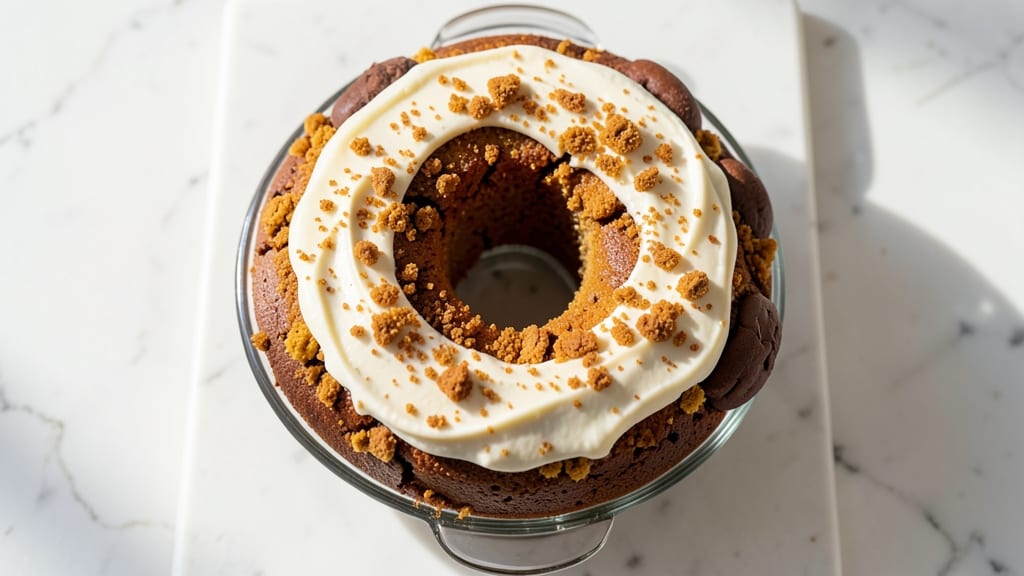
This Biscoff cookie Bundt cake recipe delivers the perfect marriage of crispy cookie edges and velvety vanilla cake layers—each bite offers contrasting textures that make it impossible to stop at one slice.
The secret lies in a clever layering technique that creates those signature cookie streaks while maintaining a moist, tender crumb. I've perfected this recipe over years of holiday baking, ensuring it's foolproof for any home kitchen with a standard Bundt pan.
The magic happens in the batter, where crushed cookies are folded into the cake mixture at precise intervals, creating those beautiful marbled streaks without making the cake too dense. A light dusting of powdered sugar between layers adds a delicate sweetness that enhances the cookie flavor.
Baking at 350°F for 50-60 minutes ensures the cake rises beautifully while developing that crispy exterior.
What you'll end up with is a showstopping Bundt cake with golden-brown cookie streaks peeking through the vanilla frosting, offering both crispy and creamy elements in every bite. The frosting—simple but rich—ties everything together with a smooth, velvety finish that melts perfectly with the warm cake.
This recipe is designed to impress without requiring advanced baking skills.
Perfect for holiday gatherings, special occasions, or when you simply crave something decadent yet approachable. The cake keeps well for up to 3 days and tastes even better the next day as the flavors meld. Here's how to create this crowd-pleasing masterpiece.
Ingredients for biscoff cookie bundt cake
Twelve ingredients create a showstopping Bundt cake with crispy cookie streaks and velvety vanilla layers.
| Ingredient | Amount | Notes |
|---|---|---|
| All-Purpose Flour 🌾 | 3 cups | Sifted for even texture |
| Granulated Sugar 🍚 | 2 cups | Superfine preferred for smoothness |
| Biscoff Cookies 🍪 | 2 cups | Crushed into fine crumbs |
| Unsalted Butter 🧈 | 1 ½ cups | Room temperature, full-fat |
| Vanilla Extract 🌿 | 2 tsp | Pure Madagascar preferred |
| Vanilla Bean Paste 🌿 | 1 tbsp | For authentic streaks |
| Large Eggs 🥚 | 4 whole | Room temperature |
| Powdered Sugar 🍚 | 1 cup | For layering |
| Baking Powder 🧂 | 2 tsp | Aluminum-free preferred |
| Salt 🧂 | ½ tsp | Fine sea salt |
| Whole Milk 🥛 | 1 cup | Room temperature |
| Confectioners' Glaze 🍚 | 2 cups | For final coating |
| Vanilla Bean Seeds 🌿 | 1 tsp | Scraped from 1 pod |
The Biscoff cookies are non-negotiable here—their signature crumb is what makes this cake special. Grab a 12-ounce bag from the bakery section of any grocery store, or use your favorite chocolate sandwich cookies if you can't find them. For the vanilla, Madagascar beans give the most complex flavor, but regular extract works in a pinch. The butter should be room temperature but not melted—press a finger into it to test. If it leaves a dent, it's ready. For the frosting, Wilton confectioners' glaze is my go-to because it's smooth and sets perfectly without being too sweet.
No Biscoff cookies? Crushed chocolate sandwich cookies will work, but the flavor won't be identical. Running low on vanilla extract? Vanilla sugar at 1/4 tsp per tsp of extract is a decent swap, though it adds subtle graininess. The vanilla bean paste is optional but worth it—it adds those gorgeous streaks and a deeper vanilla flavor. If you skip it, use an extra 1/2 tsp of extract. For the frosting, if you prefer a richer taste, add 1 tbsp softened butter to the glaze. The powdered sugar should be sifted before using to avoid lumps in the cake layers.
Store the cake in an airtight container at room temperature for up to 3 days, though it's best enjoyed within 24 hours. The frosting can be made a day ahead and stored in the fridge—just re-whisk before using. For serving, dust with extra powdered sugar or a sprinkle of crushed cookies. This cake freezes beautifully—wrap tightly in plastic and freeze for up to 3 months. Let it thaw at room temperature before serving for the best texture.
Why You'll Love This Recipe
- No Mixer Needed: I swear by this recipe when I’m too tired to cream butter and sugar—just use a fork to mash the Biscoff cookies into the dough. The crumbs blend right in, so you get that melty, cookie-studded texture without extra effort.
- Two Flavors in One: That first bite of warm cake gives way to the buttery crunch of crushed Biscoff cookies, all wrapped in vanilla’s familiar hug. It’s like dessert and comfort food had a lovechild, and honestly? I’ll take it any day.
- Weeknight Hero: Between us, this cake is my go-to when I need something impressive but low-stress. Bake it for a last-minute dinner guest, freeze a slice for a lazy afternoon, or even pack it for a picnic—it’s always a crowd-pleaser.
- Budget-Friendly Luxury: I stretch a box of Biscoff cookies and a stick of butter to make this feel like a bakery cake. The sugar and flour are pantry staples, so it’s basically gourmet on a shoestring—no guilt, just pure satisfaction.
Step-by-step instructions for Biscoff cookie Bundt cake
This method delivers a perfect balance of crispy cookie crumbs and creamy vanilla cake layers every time.
Prepare the Cookie Crumbs and Vanilla Streaks
First, crush the 2 cups of Biscoff Cookies into fine crumbs using a food processor or rolling pin. You want them to resemble coarse sand—this ensures even distribution throughout the cake. In a small bowl, mix these crumbs with 1 cup of the 2 cups Granulated Sugar and set aside.
Next, scrape the 1 tsp Vanilla Bean Seeds from 1 pod and mix them with the 1 tbsp Vanilla Bean Paste. This creates those beautiful golden streaks that make this cake visually stunning. I like to set aside 1 teaspoon of this mixture for the glaze later—save it in a small container until needed.
Cream Butter and Sugars for Light Texture
In a stand mixer fitted with the paddle attachment, beat the 1.5 cups Unsalted Butter and remaining 1 cup Granulated Sugar on medium speed for 3-4 minutes until light and fluffy. You're looking for a texture that nearly doubles in volume and becomes pale in color—this incorporates air that creates those tender cake layers.
Gradually add the 4 whole Large Eggs, one at a time, mixing well after each addition. Then add the 2 tsp Vanilla Extract and mix for another 30 seconds. This step ensures the eggs are fully emulsified into the butter mixture, which prevents dense cake layers later.
Combine Dry Ingredients and Cookie Mixture
In a separate bowl, whisk together the 3 cups All-Purpose Flour, 2 tsp Baking Powder, and 0.5 tsp Salt. Sift this mixture directly into the butter mixture while mixing on low speed. This prevents gluten development that would make the cake tough.
Add the crushed cookie mixture and mix on low speed until just combined. Then pour in the 1 cup Whole Milk and mix until smooth. The batter should be thick but pourable—if it's too thick, add 1-2 tablespoons of milk to reach the right consistency. This ensures the cookie crumbs are evenly distributed throughout the cake.
Layer and Bake for Perfect Texture
Preheat your oven to 350°F and grease a 10-cup Bundt pan thoroughly with butter and flour. Pour half of the batter into the pan, then sprinkle half of the reserved 1 cup Powdered Sugar evenly over the surface. Repeat with the remaining batter and powdered sugar.
Bake for 50-55 minutes, or until a toothpick inserted into the center comes out clean. The cake should have a golden brown top but still feel slightly springy to the touch. Here's the thing—don't overbake. The cake continues cooking as it cools, and overbaking leads to dry layers instead of that perfect crispy-creamy texture we're after.
Glaze and Finish with Vanilla Streaks
While the cake is still warm, prepare the glaze by mixing the 2 cups Confectioners' Glaze with 2-3 tablespoons of milk until smooth. Add the reserved 1 teaspoon vanilla bean seed mixture and stir well. Pour this glaze over the warm cake and let it set for 10 minutes.
For the final touch, carefully run a knife around the edges of the cake to release it from the pan. Place it on a wire rack and let it cool completely before serving. The contrast between the crispy cookie crumbs and creamy cake layers is what makes this Bundt cake truly special—each bite delivers that perfect balance of textures and flavors.
Pro Tips For Making Biscoff Cookie Bundt Cake
- Crush Cookies Coarse: I learned this the hard way—Biscoff cookies crumble too easily when ground fine. Pulse them in a food processor until they’re a mix of fine crumbs and larger chunks, about the size of coarse sand. This keeps the texture balanced, so you don’t end up with a cake that’s all powdery or gluey.
- Butter Should Be Cool: Don’t melt that butter. Use it straight from the fridge, cold but soft enough to press into the sugar. This keeps the cake tender without turning it greasy, and it won’t make the batter separate when you fold in the cookie crumbs. Trust me, your Bundt will thank you.
- Check Doneness Early: This cake’s got sugar and butter fighting against even baking, so pull it out when the edges are set but the center still jiggles slightly. It’ll firm up as it cools—overbaking turns it dry and cracks the top. Five minutes early is better than one minute late.
- Toast Cookie Crumbs: Spread the crushed Biscoff cookies on a baking sheet and toast them for 5–7 minutes at 325°F until they smell toasty. This deepens their flavor and prevents the cake from tasting like raw dough. (Yes, even if you’re impatient like me.)
Essential equipment for perfect results
Bundt Pan Essentials
A 10-cup Bundt pan is non-negotiable for this recipe—it's designed to create those intricate ridges that make Bundt cakes visually stunning. I recommend a nonstick Bundt pan from Wilton or Nordic Ware for easy release and even baking.
If your pan isn't nonstick, grease it thoroughly with butter and flour or use a baking spray like Baker's Joy for foolproof release. 🧈
Stand Mixer for Lightness
While you can mix the batter by hand, a stand mixer with a paddle attachment is a game-changer for achieving that light, airy texture. I use my KitchenAid Artisan Series for this recipe—it handles the butter and sugar creaming effortlessly.
If you don't have a mixer, use a hand mixer for at least 5 minutes of vigorous beating to incorporate air properly. The key is patience here—rushing this step leads to dense cake layers.
Food Processor for Crumbs
For even cookie crumbs, a food processor is your best friend. Pulse the 2 cups of Biscoff cookies in 10-second bursts until you reach a coarse, sandy texture.
If you don't have one, use a rolling pin and ziplock bag—place cookies in the bag, seal, and roll with the pin until crushed. Just be careful not to over-process, or you'll end up with cookie dust instead of crumbs.
This texture is crucial for those perfect streaks in the cake.
Measuring Cups & Spoons
Precision matters in baking, so invest in a set of liquid and dry measuring cups with clear markings. I swear by OXO Good Grips for their accuracy and durability. For the vanilla bean seeds, use a small spoon to scrape them from the pod—don't eyeball it!
A microplane also works well for getting every last bit of flavor from the pod. The powdered sugar should be sifted before using to avoid lumps in the cake layers.
Wire Rack & Offset Spatula
A wire cooling rack is essential for letting the cake cool evenly after baking—this prevents sogginess from trapped steam. Place it directly on your counter or over a baking sheet to catch any crumbs. For frosting, an offset spatula helps spread the glaze smoothly without tearing the cake layers.
I also keep a small bowl of warm water nearby to dip the spatula in—this prevents the glaze from sticking and makes spreading effortless. ✨
Optional Pro Tools
For next-level results, consider a digital kitchen scale for precise measurements—especially useful if you're adapting the recipe. A thermometer ensures your oven is at the correct 350°F (some ovens run hot or cold).
And if you love vanilla like I do, a vanilla bean infuser lets you scrape seeds directly into the batter without mess. These aren't must-haves, but they elevate the process for serious bakers.
Nutrition facts
Frequently asked questions
Can I substitute Biscoff cookies with regular chocolate chip cookies?
Yes, but the flavor will differ slightly. Use 2 cups of crushed chocolate chip cookies for the same texture, though Biscoff cookies provide that signature buttery, slightly salty taste that makes this cake special. For a closer match, try Nutter Butter cookies—their peanut butter flavor pairs beautifully with vanilla.
Why does my Bundt cake come out dense instead of light? Overmixing the batter or not creaming the butter and sugar properly are the most common culprits.
How do I fix a cake that stuck to the Bundt pan?
Run a thin metal spatula or knife around the edges while the cake is still warm to loosen it. If it's stubborn, invert the pan onto a plate and gently tap the sides. For next time, use a nonstick pan or grease with butter and flour (not just butter). A baking spray like Baker's Joy also works wonders for easy release.
Can I make this cake ahead of time?
The cake actually tastes better the next day as the flavors meld. Bake it 1 day ahead, wrap tightly in plastic, and store at room temperature. For the glaze, make it fresh before serving—it sets best on warm cake. If you need to store longer, freeze the baked (unfrosted) cake for up to 3 months and thaw at room temperature.
What's the secret to those beautiful cookie streaks?
The magic happens in the batter consistency and layering technique. Mix the cookie crumbs with 1 cup of sugar before folding into the batter, and pour half the batter, then powdered sugar, then repeat. The sugar helps distribute the crumbs evenly. Also, don't overmix after adding the milk—just combine until smooth to maintain those streaks.