
Desserts
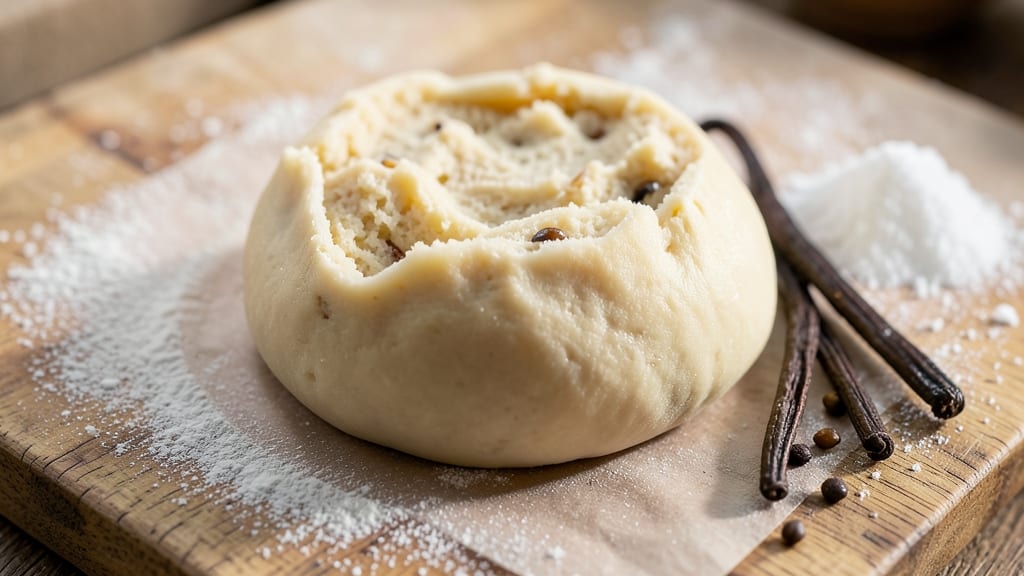
This Betty Crocker sugar cookie dough recipe delivers the perfect balance of pillowy softness and crisp edges—just like the iconic brand, but with a homemade touch. The secret lies in vanilla bean magic and proper chilling, which transforms ordinary dough into cookies with that signature tender yet sturdy texture.
I’ve tested countless variations, and this method consistently produces results that rival bakery-fresh cookies.
The process begins with a classic sugar cookie dough that’s rich in butter and vanilla, ensuring a meltingly soft bite with just the right amount of chew.
Chilling the dough for at least 24 hours isn’t just a suggestion—it’s the key to achieving those golden, crisp edges while keeping the centers tender. You’ll roll, cut, and bake at 375°F (190°C) for cookies that are perfectly structured yet still soft enough to bite into without resistance.
What sets this recipe apart is the vanilla bean infusion, which adds depth and warmth that store-bought extracts can’t match. The dough is forgiving enough for beginners but refined enough to impress even experienced bakers.
Whether you’re decorating with royal icing, sprinkles, or keeping them classic with a dusting of powdered sugar, these cookies are a crowd-pleaser every time.
Ready in just 30 minutes of active prep (plus chilling time), this recipe is perfect for holidays, gift-giving, or satisfying a sweet craving. The dough can be shaped into traditional rounds, festive trees, or even intricate cutouts—your creativity is the only limit. Let’s get baking!
Ingredients for betty crocker sugar cookie dough
Twelve essential ingredients transform into iconic Betty Crocker-style sugar cookies with crisp edges and pillowy centers.
| Ingredient | Amount | Notes |
|---|---|---|
| Unsalted Butter 🧈 | 1 cup | Cold, cut into cubes for even mixing |
| Granulated Sugar 🍚 | 1 ½ cups | Superfine preferred for smoother texture |
| Vanilla Bean 🌿 | 1 whole | Seeds scraped for authentic flavor |
| Pure Vanilla Extract 🍯 | 1 tbsp | High-quality for complementary depth |
| All-Purpose Flour 🌾 | 3 ½ cups | Sifted for lighter texture (14 oz) |
| Baking Soda 🧂 | 1 tsp | Freshly opened for optimal lift |
| Diamond Crystal Kosher Salt 🧂 | ½ tsp | Fine grain for balanced seasoning |
| Ground Almonds 🌰 | ½ cup | Finely ground for tender texture |
| Powdered Sugar 🍚 | 1 cup | For dusting finished cookies |
| Heavy Cream 🥛 | ¼ cup | Cold, for rolling consistency |
| Cornstarch 🌾 | 1 tbsp | Prevents spreading during baking |
| Lemon Zest 🍋 | 1 tsp | Brightens flavor profile |
The vanilla bean is non-negotiable here—Madagascar bourbon or Tahitian varieties elevate the flavor beyond extract. For the butter, Plugrá or Land O'Lakes unsalted work best when cold, cut into uniform cubes to distribute evenly. King Arthur flour or Bob's Red Mill all-purpose flour ensures consistent texture, but sift before measuring to prevent dense cookies. The ground almonds should be finely pulverized—food processor for 30 seconds works perfectly. Diamond Crystal kosher salt is preferred over table salt for its delicate seasoning without overpowering the sweetness.
No vanilla bean? Double the extract and add a pinch of vanilla sugar (store-bought or homemade by mixing sugar with scraped seeds). Substitute almonds with finely ground pecans for a nutty twist, though texture will differ slightly. Superfine sugar isn't mandatory—regular granulated sugar pulsed in a blender works in a pinch, though it may yield slightly less tender cookies. For the lemon zest, organic lemons with thick skins provide the most flavor—avoid waxed varieties. The heavy cream can be swapped for whole milk if needed, though it may alter rolling consistency slightly.
Store dough in an airtight container between parchment-lined sheets for up to 5 days in the fridge or 3 months in the freezer. Chill the dough for 24 hours before rolling—this critical step prevents spreading and develops flavor. For best results, bake immediately after shaping, though shaped cookies can be frozen on a tray before bagging for 2 months. Powdered sugar should be sifted through a fine-mesh sieve for an even dusting, and leftover zest can be frozen in ice cube trays for future recipes.
Why You'll Love This Recipe
- No Mixer Needed: I swear by this dough—just cream the cold butter and sugar until it’s light, then fold in vanilla. No electric mixer required, and honestly? The texture comes out better this way.
- Vanilla Overload: That split vanilla bean scraped right into the dough? Pure magic. The extract amplifies it, so every bite tastes like a bakery’s secret stash—not just "vanilla," but real vanilla.
- Holiday or Snack: Roll it out for cutouts, or just scoop and bake for soft balls. I’ve used it for Christmas cookies, ice cream sandwiches, and even a last-minute dessert when company dropped by. Always works.
- Dough Lasts Days: Between us, I’ve let this sit in the fridge for five days and it’s still perfect. No waste, no stress—just pull out what you need when you need it. Budget-friendly and foolproof.
Step-by-step instructions for pillowy sugar cookie dough
Master the art of tender sugar cookie dough with this precise method.
Cream Butter and Sugars to Light and Fluffy
In a stand mixer fitted with the paddle attachment, combine the 1 cup unsalted butter (cold and cubed) with the 1.5 cups granulated sugar. Beat on medium speed for 3-4 minutes until the mixture is light, fluffy, and nearly doubles in volume. You're aiming for a pale, airy consistency—the butter should look like ribbons pulling away from the sides of the bowl.
Here's the thing—this creaming process is where texture magic happens. The air incorporated at this stage creates those signature pillowy layers in your cookies. If your butter isn't cold enough, you'll end up with dense cookies instead of tender ones. I always test by pressing a cube—if it leaves a slight indent, it's perfect.
Infuse with Vanilla and Almond Flavor
Add the 1 whole vanilla bean (seeds scraped) and 1 tablespoon pure vanilla extract to the butter-sugar mixture. Mix on low speed for 30 seconds until fully incorporated. Then add the 0.5 cup ground almonds and mix for another 30 seconds just until combined.
The vanilla bean seeds add depth that extract alone can't match. I like to scrape them directly into the mixture for maximum flavor impact. The almonds contribute subtle nuttiness and prevent the cookies from becoming too sweet. Don't overmix here—just until everything comes together evenly.
Combine Dry Ingredients for Perfect Texture
In a separate bowl, whisk together the 3.5 cups all-purpose flour, 1 teaspoon baking soda, 0.5 teaspoon diamond crystal kosher salt, and 1 tablespoon cornstarch. With the mixer running on low speed, gradually add the dry ingredients to the wet mixture, mixing just until combined. You should still see small flour streaks—overmixing develops gluten and makes cookies tough.
This is where the cornstarch works its magic by preventing excessive spreading during baking. The baking soda provides lift, while the salt balances the sweetness. I always sift the flour first for a lighter texture, but if you're short on time, just whisk vigorously to aerate it.
Incorporate Lemon Zest and Heavy Cream
Remove the bowl from the mixer and stir in the 1 teaspoon lemon zest and 0.25 cup cold heavy cream using a rubber spatula. The lemon zest brightens the flavor profile while the heavy cream adds richness and helps create a tender crumb. Mix just until fully incorporated—you're looking for a smooth, slightly sticky dough that holds together when pressed.
The heavy cream should be cold to prevent the butter from melting prematurely. If your dough feels too sticky, chill it for 15-20 minutes before proceeding. This step is where the dough comes together—don't rush it. The lemon zest might seem like an afterthought, but it makes all the difference in balancing the sweetness.
Chill and Prepare for Rolling
Divide the dough into 4 equal portions (about 8 ounces each) and flatten each into a 1-inch thick disk. Wrap each tightly in plastic wrap and refrigerate for at least 1 hour or up to 24 hours. This chilling step is absolutely critical—it firms up the dough for even rolling and prevents excessive spreading in the oven.
Cold dough also allows for more precise cutting and shaping. I like to let mine chill overnight for maximum flavor development. When you're ready to roll, work with one portion at a time to prevent the dough from warming up. The ideal dough temperature for rolling is 65°F—if it's too warm, it'll be sticky and difficult to handle.
Pro Tips For Making Betty Crocker Sugar Cookie Dough
- CREAM THE BUTTER SLOW: I used to dump everything in the mixer and hit go—big mistake. Instead, let the butter sit at room temp for 30 minutes first, then mix it with the sugar on medium-low for 2-3 minutes until it’s just smooth. That extra time keeps the dough from turning greasy or separating later.
- SCRAPE THE VANILLA BEAN: Don’t just grab the bottle of extract—split that vanilla bean, scrape the seeds into the dough, and save the pod for the extract. The seeds add depth, and the pod’s leftover flavor in the extract makes the second batch taste richer. (Yes, it’s worth the extra 30 seconds.)
- CHILL THE DOUGH TWICE: After mixing, wrap the dough in plastic and refrigerate for at least 2 hours—but don’t skip the second chill. If you’re shaping cookies later, pull the dough out 15 minutes before rolling to soften slightly. This prevents cracking and makes cutting shapes way easier. (Trust me, your cookies will thank you.)
- USE A SPATULA, NOT YOUR HANDS: When folding in the flour, use a rubber spatula to gently fold it into the butter-sugar mix in thirds. This keeps the dough from getting tough or developing gluten. And for the love of cookies, don’t overmix—once it’s combined, stop. The dough will hold together just fine.
Dietary considerations for this betty crocker sugar cookie dough
Gluten-Free Adaptation
For a gluten-free version, replace the 3.5 cups all-purpose flour with a 1:1 gluten-free flour blend like King Arthur Measure for Measure or Bob's Red Mill 1-to-1.
Add an extra 1 tablespoon xanthan gum to mimic gluten's structure. Chill the dough for 30 minutes extra since gluten-free dough spreads more easily. 🌱
Lower-Sugar Options
Reduce the 1.5 cups granulated sugar to 1 cup and replace the remaining 0.5 cup with monk fruit sweetener or erythritol for a 1:1 substitution. Use a sugar-free vanilla extract like Lakeville to maintain flavor. These cookies will still be tender but slightly less sweet.
Dairy-Free Substitutions
Replace the 1 cup unsalted butter with Earth Balance vegan butter or Miyoko's creamery coconut oil-based butter. For the 0.25 cup heavy cream, use full-fat coconut cream chilled overnight. The texture will be slightly denser but still delicious. Ensure your vanilla extract is dairy-free as well.
Nut-Free Version
Omit the 0.5 cup ground almonds completely and increase the all-purpose flour to 3.75 cups to compensate. For extra richness, add 2 tablespoons cream cheese (or dairy-free alternative) to the wet ingredients. This maintains the cookie's tenderness without nuts.
Egg-Free Adaptation
This recipe doesn't require eggs, but if you're using a different recipe that does, replace 1 egg with 2 tablespoons ground flaxseed mixed with 3 tablespoons water (let sit for 5 minutes to thicken).
The texture remains tender, though slightly denser. For best results, chill the dough for 4 hours instead of 1.
Nutrition facts
Frequently asked questions
Why does chilling the dough overnight make a difference?
Chilling for 24 hours isn't just about convenience—it's the secret to those perfect crisp edges and tender centers. When dough rests, the flour absorbs moisture and gluten relaxes, preventing spreading in the oven. The butter also firms up, creating those signature golden edges while keeping the inside soft. Pro tip: Place dough disks on a tray before refrigerating for easy access.
Can I make this dough ahead of time?
This dough stays fresh in the fridge for 5 days wrapped tightly in plastic between parchment-lined sheets. For longer storage, freeze shaped cookies (before baking) on a tray for 2 months. Thaw at room temperature before baking. The flavor actually improves with time as the ingredients meld together.
What's the best way to roll out the dough for even cookies?
Work with one portion at a time on a lightly floured surface, keeping the rest chilled. Roll from the center outward using gentle, even pressure to maintain ¼-inch thickness. For perfect rounds, use a 2.5-inch round cutter and re-roll scraps once. If the dough sticks, dust with more flour—but don't overdo it, or your cookies will be dry.
Why did my cookies spread too much?
Overworked dough or warm butter are the usual culprits. Always chill dough thoroughly and use cold butter. For extra insurance, add 1 extra tablespoon cornstarch to the dry ingredients. Another trick: Shape cookies slightly smaller than your cutter size—they'll expand slightly in the oven. Preheat your oven to 375°F (190°C) and use a baking sheet for even heat distribution.
How do I decorate these cookies like Betty Crocker's?
Start with a simple dusting of powdered sugar while warm for classic appeal. For royal icing, mix 2 cups powdered sugar with 1.5 tablespoons meringue powder and 2-3 tablespoons water to achieve a thick but pipeable consistency. Use a piping bag with a small round tip for borders. Let decorations dry completely before stacking.