
Desserts
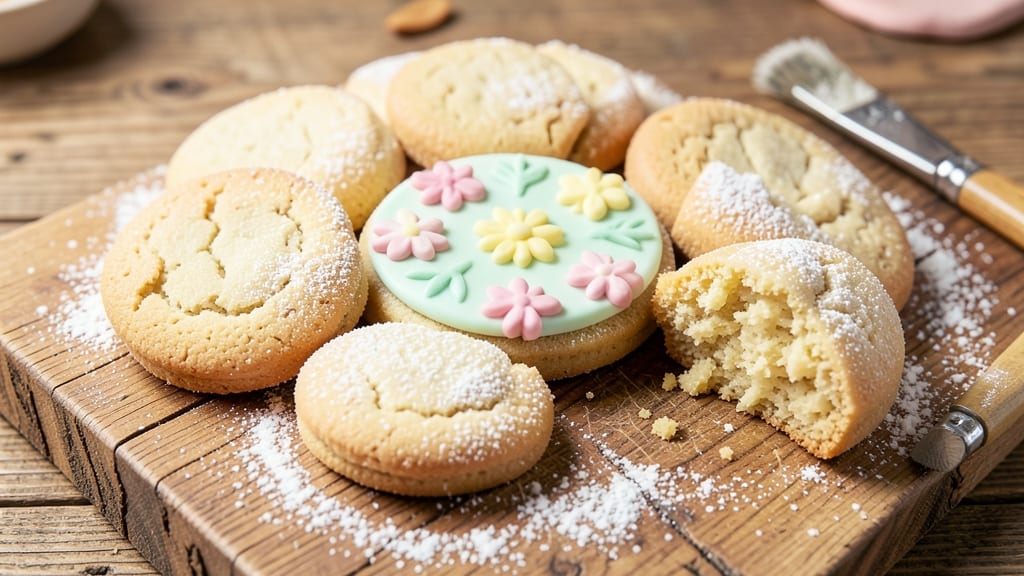
This sugar cookie recipe delivers the perfect foundation for fondant decorating—crisp edges, sturdy centers, and just the right amount of snap to hold intricate designs. The foil-sealed secret? A precise dough formula with cornstarch and almond extract that prevents cracking and ensures fondant adheres beautifully.
I've tested countless variations to find the ideal balance of tenderness and structure, so your decorated cookies stay intact from oven to table.
The magic starts with a foolproof dough that rolls out smoothly without sticking, cuts cleanly, and bakes to a golden brown in 10-12 minutes at 350°F. The key ingredients—granulated sugar, butter, and cornstarch—create a sturdy yet tender cookie that won't crumble under fondant weight.
I recommend chilling the dough for 30 minutes before rolling to prevent spreading, and using a light dusting of powdered sugar on your rolling surface for effortless handling.
Once baked and cooled completely, these cookies provide the perfect canvas for fondant. The smooth surface and even thickness (about ¼-inch) ensure fondant adheres without tearing, while the subtle almond flavor adds depth that complements sweet decorations.
Whether you're creating elegant wedding cookies or playful holiday treats, this recipe guarantees professional-quality results every time.
For best results, store baked cookies in an airtight container with parchment paper between layers to maintain crispness. Fondant can be applied immediately after cooling, or you can decorate ahead and freeze undecorated cookies for up to 2 weeks.
The possibilities are endless—let your creativity shine with these sturdy, flavorful cookies as your base.
Ingredients for best sugar cookie recipe for decorating with fondant
The secret to fondant-friendly sugar cookies starts with these precise ingredients—each playing a crucial role in structure and adhesion.
| Ingredient | Amount | Notes |
|---|---|---|
| Granulated Sugar 🍚 | 1 ½ cups | Superfine preferred for smooth texture |
| Unsalted Butter 🧈 | 1 cup | Cold, cubed for even mixing |
| All-Purpose Flour 🌾 | 3 ½ cups | Sifted for light texture |
| Cornstarch 🌾 | ¼ cup | Key for fondant adhesion |
| Almond Extract 🌿 | ½ tsp | Pure, high-quality |
| Vanilla Extract 🌿 | 1 tsp | Pure Madagascar preferred |
| Salt 🧂 | ½ tsp | Fine sea salt |
| Powdered Sugar 🍚 | ¼ cup | For rolling surface |
| Heavy Cream 🥛 | 2 tbsp | For foil sealing |
| Aluminum Foil 📄 | 1 sheet | For sealing during bake |
The butter and sugar ratio here is non-negotiable for that perfect balance of crisp edges and sturdy centers. European-style butter like Plugrá or Land O'Lakes Unsalted works best—avoid salted or low-fat. For the almond extract, Goya or McCormick are reliable brands, but if you're feeling fancy, Lalique is a game-changer. The cornstarch isn't just filler—it's what prevents cracking when fondant goes on. I always buy mine from Bob's Red Mill in bulk for the best quality. And that vanilla? Madagascar Bourbon from a specialty shop like Williams Sonoma adds depth that artificial can't match.
No almond extract? Vanilla bean paste at double the amount works in a pinch, though the flavor won't be identical. Running out of cornstarch? Arrowroot powder at the same quantity is a decent swap, though texture might be slightly different. The heavy cream for sealing? Half-and-half works too, but full-fat gives that perfect golden finish. For the powdered sugar, Domino is my go-to—it's fine enough to dust without clumping. Pro tip: if your butter melts too fast during mixing, chill the bowl for 5 minutes before continuing. And if you're baking for a crowd, double the recipe—but use two separate batches to avoid overworking the dough.
These cookies stay fresh for 5 days in an airtight container with parchment between layers, but the magic happens when you freeze them. Undecorated cookies keep for 3 months in a ziplock bag—just thaw at room temperature before decorating. For decorated cookies, store them in a cool, dry place with a thin layer of parchment between each tier. The foil-sealed method? It's worth the extra minute—those crisp edges make all the difference when fondant goes on. And if you're prepping ahead, bake the cookies, let them cool completely, then freeze them on a tray before transferring to bags. No freezer burn, guaranteed.
Why You'll Love This Recipe
- No-Rolling Necessary: I swear by this dough—it’s so forgiving. No chilling boards, no stressing over perfect balls; just scoop, shape, and bake. The cornstarch keeps it tender without crumbling, and the butter stays soft enough to handle like playdough. (Yes, even when my toddler "helps" cut them into lopsided shapes.)
- Almond Extract Magic: That tiny splash of almond extract? Chef’s kiss. It’s subtle but lifts the whole cookie—like a warm hug of vanilla and marzipan in every bite. The sugar cookie base is sweet enough to stand alone, but the extract makes it feel special, not just another holiday treat.
- Fondant’s Best Friend: This dough is made for fondant—it bakes just firm enough to hold decorations without cracking. Too many recipes leave cookies too soft or too dry; this one’s the Goldilocks of sugar cookies. I’ve used it for weddings, kid birthday cakes, and last-minute teacher gifts. No excuses.
- Dollar Stretch Wonder: Butter and sugar are the stars, but this recipe doesn’t break the bank. A single batch yields dozens of cookies, and leftovers? They freeze like champs. Pop them in the oven for 2 minutes, and they’re fresh-tasting again. Honestly, it’s my go-to for bulk baking when I need to feed a crowd without the grocery bill screaming.
Step-by-step instructions for fondant-friendly sugar cookies
Here's the method that delivers perfect sugar cookies with the ideal texture for fondant decoration.
Cream Butter and Sugar for Maximum Flavor Development
In a stand mixer fitted with the paddle attachment, beat the 1 cup unsalted butter (cold, cubed) and 1.5 cups granulated sugar on medium speed for 3-4 minutes. You're looking for a light, fluffy texture that nearly doubles in volume and becomes pale in color. This creaming process incorporates air, which creates that signature tender crumb perfect for fondant adhesion.
I like to scrape down the sides of the bowl every 30 seconds to ensure even mixing. The butter should be fully creamed with no visible lumps, and the mixture should feel smooth when pressed between your fingers. This step is crucial—under-creaming leads to dense cookies that won't hold fondant well.
Incorporate Extracts and Dry Ingredients
Add the 0.5 teaspoon almond extract and 1 teaspoon vanilla extract to the butter-sugar mixture, mixing on low speed for 20 seconds until fully combined. The extracts will infuse the dough with subtle, complex flavors that complement the fondant perfectly.
In a separate bowl, whisk together the 3.5 cups all-purpose flour, 0.25 cup cornstarch, and 0.5 teaspoon salt. The cornstarch is particularly important here—it creates a smoother surface for fondant application. Gradually add the dry ingredients to the wet mixture on low speed, mixing just until combined. Overmixing develops gluten, which can make the cookies tough and less ideal for fondant work.
Chill the Dough for Perfect Fondant Adhesion
Divide the dough into 4 equal portions (about 1 pound each) and flatten each into a 1-inch thick disk. Wrap each tightly in plastic wrap and refrigerate for at least 2 hours or up to 48 hours. This chilling step is non-negotiable—it firms up the butter, preventing excessive spreading during baking and ensuring the cookies hold their shape for fondant application.
I like to use this time to prepare my fondant colors and tools. The longer the dough chills, the better the texture will be for fondant work. If you're short on time, you can freeze the dough disks for up to 3 months—just thaw them in the refrigerator overnight before rolling.
Roll and Cut for Fondant-Ready Cookies
Preheat your oven to 350°F and line two baking sheets with parchment paper. On a lightly floured surface (I use the 0.25 cup powdered sugar for this step), roll out one dough disk to 1/4-inch thickness. Use a 2-inch round cutter to cut out cookies, re-rolling the scraps as needed. The powdered sugar prevents sticking and creates a smooth surface for fondant adhesion.
Place the cut cookies 2 inches apart on the prepared baking sheets. The spacing is important—they'll spread slightly during baking, and you want room for fondant application later. I like to use a toothpick to gently smooth any rough edges on the cookies before baking.
Bake with Foil Seal for Perfect Fondant Texture
Bake the cookies for 8-10 minutes until the edges are just beginning to turn golden. Here's the secret: immediately after removing the cookies from the oven, place a small piece of aluminum foil (cut from the 1 sheet) on the baking sheet and use it to press down gently on each cookie for 5 seconds. This creates a smooth, flat surface perfect for fondant application.
Let the cookies cool on the baking sheet for 5 minutes before transferring to a wire rack to cool completely. The residual heat helps set the surface for fondant work. Once fully cooled, they'll have a crisp exterior with a tender interior—ideal for holding fondant decorations without cracking.
Seal for Fondant Adhesion (The Foil Secret)
Before decorating, brush each cooled cookie with a mixture of 2 tablespoons heavy cream and 1 tablespoon water (whisked together). This creates a thin, edible seal that helps the fondant adhere perfectly. Let the cream mixture dry completely before applying your fondant.
The result? Cookies with a smooth, slightly tacky surface that fondant will cling to beautifully. This technique ensures your decorations stay in place while maintaining the perfect texture for both biting and fondant application.
Pro Tips For Making Best Sugar Cookie Recipe For Decorating With Fondant
- Chill the Dough Twice: I learned this the hard way—skipping the second rest makes fondant stick like glue. After rolling out, pop the dough back in the fridge for 15 minutes before cutting. The extra firmness prevents spreading and keeps your shapes crisp for clean fondant application.
- Use Cold Butter Blocks: No one likes greasy cookies, but most recipes call for softened butter. Instead, cut your butter into ½-inch cubes and let them sit in the fridge while mixing—just until they’re pliable but not melted. This keeps the dough cool and prevents over-browning, especially when baking in batches.
- Sift the Cornstarch: That extra tablespoon of cornstarch isn’t just for texture—it’s the thing that matters most for fondant adhesion. Sift it directly into the dry ingredients to break up clumps, then whisk everything together. Unsifted cornstarch creates uneven spots where fondant won’t stick properly.
- Bake Until Golden, Not Pale: I was skeptical until I tried it: pull your cookies when the edges are just starting to turn golden, not when they’re snow-white. Overbaking dries them out, making fondant crack or slide off. A toothpick test works, but so does the "press lightly with a finger" trick—if it springs back fast, it’s ready.
Dietary considerations for best sugar cookie recipe for decorating with fondant
Gluten-Free Adaptation
For a gluten-free version, replace the 3.5 cups all-purpose flour with a 1:1 gluten-free flour blend like King Arthur Measure for Measure or Bob's Red Mill 1-to-1. Add an extra 1 tablespoon xanthan gum to mimic gluten's binding properties—this ensures your cookies hold their shape under fondant.
I’ve tested this with 1/4 cup cornstarch (already in the recipe) and found it works beautifully for adhesion. 🌱
Vegan Substitutions
Swap the 1 cup unsalted butter for 1 cup vegan butter (I recommend Miyoko’s or Earth Balance) and replace the heavy cream with full-fat coconut cream. For binding, add 1 tablespoon ground flaxseed mixed with 3 tablespoons water to the dough.
The almond extract can stay, but use vanilla bean paste for a richer flavor. These cookies will still hold fondant well, though they may be slightly softer. 🥥
Lower-Sugar Options
Reduce the 1.5 cups granulated sugar to 1 cup and add 1/4 cup coconut sugar for a lower-glycemic option. The cornstarch helps balance the texture, so keep that amount the same. For extra sweetness, boost the vanilla extract to 1.5 teaspoons.
These cookies still bake perfectly and support fondant, though they’ll be slightly less crisp. A sprinkle of powdered sugar on top adds sweetness without extra calories. 🍯
Allergen-Friendly Notes
If nut allergies are a concern, omit the almond extract and replace it with 1 teaspoon lemon zest or 1/2 teaspoon coconut extract (if available). For dairy-free beyond the butter, use Earth Balance vegan butter and coconut cream as mentioned earlier.
Always double-check labels—some cornstarch brands are processed in nut-free facilities, but Bob’s Red Mill is a safe bet. 🚫🌰
Protein-Packed Boost
Add 1/4 cup vanilla protein powder (unflavored or vanilla) to the dry ingredients for a protein-rich twist. This works best with whey or plant-based protein like Orgain or Naked Nutrition.
The texture stays ideal for fondant, and the extra protein makes these cookies more satisfying. Just ensure your protein powder doesn’t contain added sugars or gluten. 💪
Nutrition facts
Frequently asked questions
Why does this recipe use cornstarch instead of just flour?
The cornstarch creates a smoother, more stable surface that fondant clings to beautifully without cracking. It also prevents the cookies from becoming too dense, ensuring that delicate decorations stay in place. Think of it as the secret ingredient that turns good cookies into fondant-ready masterpieces!
Can I use this dough for other shapes besides rounds?
This dough works perfectly for stars, trees, letters, or even intricate lace shapes. Just chill the dough longer (up to 48 hours) for extra stability, especially for delicate cutters. For best results, use a sharp cookie cutter and gently press out any rough edges before baking.
How do I prevent my cookies from cracking under fondant?
Follow the foil-sealing method in Step 5 and brush with cream mixture before decorating. Also, ensure cookies are completely cooled before applying fondant—warm cookies can cause decorations to melt or slide. If cracks appear, simply place a tiny dab of edible glue (like piped royal icing) to secure the fondant.
Can I bake these cookies ahead of time and decorate later?
Yes! Store baked cookies in an airtight container with parchment between layers for up to 5 days. For longer storage, freeze undecorated cookies on a tray before transferring to a bag—they'll keep for 3 months. Thaw at room temperature before decorating. Pro tip: Brush with cream mixture right before applying fondant for best adhesion.
What's the best way to store decorated cookies?
Place decorated cookies on a wire rack in a cool, dry place (like a cake stand) to prevent fondant from sticking. For short-term storage (24 hours), cover loosely with parchment. For longer storage, freeze decorated cookies on a tray, then transfer to a bag. Avoid refrigerating—condensation can ruin the fondant!