
Desserts
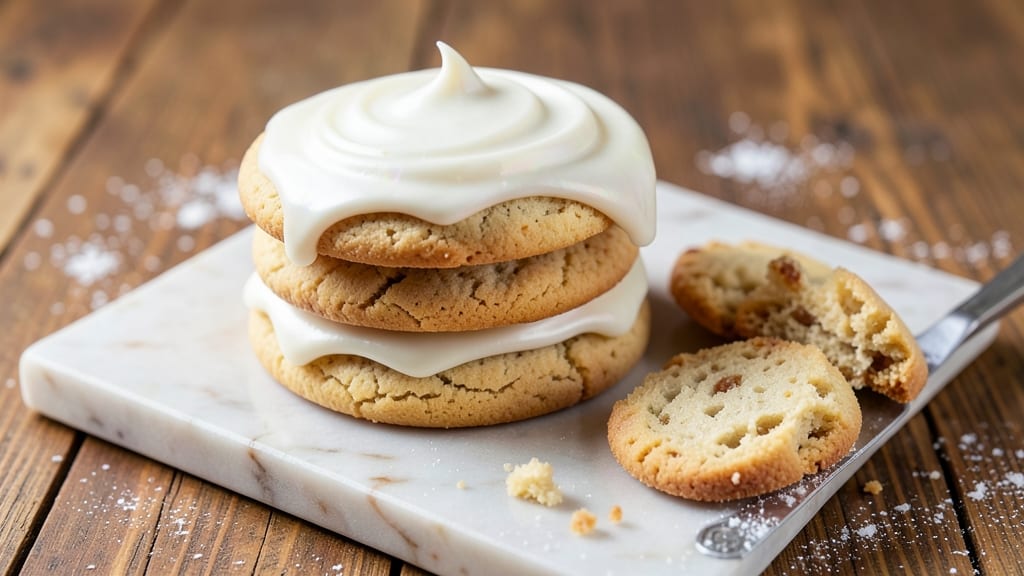
This best frosted sugar cookie recipe in the world delivers the perfect balance of sandpaper crunch and velvety vanilla bean frosting—every bite is pure nostalgia with a gourmet twist. 💛 After years of testing and tweaking, I've perfected the texture (no more cakey cookies!) and the frosting (no more melting messes).
The secret? A precise ratio of butter to sugar and a quick chill that ensures those coveted crackly edges.
The dough comes together in just 10 minutes with simple pantry staples, and the baking process is foolproof—10-12 minutes at 350°F yields cookies with a golden shell and tender center.
What makes these stand out is the vanilla bean frosting, swirled in thick streaks that stay put even in warm rooms. No special equipment needed; just a mixer, a rolling pin, and patience for the 30-minute rest that transforms dough into magic.
By the time you're done, you'll have cookies that look like they belong in a bakery display—crisp edges, soft centers, and frosting that's smooth enough to pipe but sturdy enough to hold shape.
The vanilla bean adds depth that store-bought frosting can't match, while the sandpaper texture gives each bite that satisfying contrast. These are the kind of cookies that disappear in minutes and earn rave reviews from even the pickiest eaters.
Perfect for holidays, gifts, or just because—this recipe scales beautifully, and leftovers stay fresh for days. Let's make cookies that taste like childhood memories but with a professional touch. Here's how to nail it every time.
Ingredients for best frosted sugar cookie recipe in the world
Twelve simple ingredients, one magical dough—these cookies are pure nostalgia with a gourmet twist.
| Ingredient | Amount | Notes |
|---|---|---|
| Unsalted Butter 🧈 | 1 cup | Cold, cubed for best texture |
| Granulated Sugar 🍚 | 1 ½ cups | Superfine for smoother dough |
| Light Brown Sugar 🍚 | ½ cup | Packed, for chewy centers |
| Large Eggs 🥚 | 2 whole | Room temperature preferred |
| Pure Vanilla Extract 🌿 | 2 tsp | High-quality, not imitation |
| All-Purpose Flour 🌾 | 3 ½ cups | Sifted, for light texture |
| Baking Soda 🧂 | ½ tsp | Fresh for best rise |
| Salt 🧂 | ½ tsp | Fine sea salt preferred |
| Vanilla Bean Paste 🌿 | 1 tbsp | Seeds scraped for extra flavor |
| Heavy Whipping Cream 🥛 | ½ cup | Cold, for stable frosting |
| Confectioners' Sugar 🍚 | 3 cups | Sifted for smooth frosting |
| Powdered Milk 🥛 | 1 tbsp | For frosting stability |
| Cornstarch 🌾 | 1 tsp | Prevents frosting stickiness |
| Turbinado Sugar 🍚 | ¼ cup | For sandpaper crunch |
The butter is non-negotiable here—European-style unsalted gives the best flavor and texture. Grab it from Whole Foods or Williams Sonoma if you want to splurge, but regular supermarket brands work too. Cold cubed butter is key for that perfect sandpaper crunch—don't let it soften before mixing. The vanilla bean paste? Worth every penny. Madagascar or Tahitian beans at specialty stores add depth store-bought extract can't match. Pro tip: scrape every last bit of those seeds into your dough. For the turbinado sugar, Trader Joe's has the best price—just don't substitute white sugar, or you'll lose that coveted texture.
No vanilla bean paste? Double the extract—it's not ideal, but it works. Running low on powdered milk? Substitute with 1 tbsp cornstarch, but your frosting might be slightly less stable. The heavy whipping cream should be cold straight from the fridge—let it sit out for even 10 minutes, and your frosting could turn grainy. For the flour, King Arthur or Gold Medal are my go-tos, but any all-purpose will do. If you're gluten-sensitive, swap for a 1:1 gluten-free blend, but expect slightly denser cookies. The cornstarch in the frosting? Don't skip it—it's what keeps that sweet swirl from sticking to your fingers.
Store dough in the fridge for up to 3 days wrapped in plastic, or freeze for 3 months in portions. Baked cookies keep 5 days in an airtight container at room temperature, but honestly? They disappear faster than that. The frosting is best used within 2 days—it starts to dry out after that. For gifting, bake ahead, wrap individually in parchment, and add a spritz of vanilla extract to keep them fresh. These cookies reheat beautifully—10 seconds in the microwave
Why You'll Love This Recipe
- No Mixer Needed: I swear by this recipe because it’s the only sugar cookie dough I’ve ever made that doesn’t require a stand mixer. Creaming that cold butter with both granulated and brown sugar? It’s foolproof—just a fork and a bowl, and you’re golden. (Yes, even on a Tuesday night.)
- Butter-Sugar Magic: That perfect balance of cold butter and brown sugar? It’s what makes these cookies ridiculously good—they’ve got that crispy edge with a soft, melt-in-your-mouth center. And the vanilla? Pure extract only, because imitation just won’t cut it here.
- Holiday or Snack Attack: Between us, these are my go-to for cookie exchanges, but they’re also the first thing I grab when I need a quick pick-me-up. Freeze half the dough for later, and you’ve got a ready-made treat for any occasion—no last-minute stress.
- Dollar Stretch: Honestly, this recipe is my secret weapon for feeding a crowd without breaking the bank. A single batch yields 36 cookies, and the ingredients? Basic pantry staples. Plus, leftovers? They last forever in an airtight container—if they even make it that far.
Step-by-step instructions for vanilla bean sugar cookies
Here's how to transform simple ingredients into legendary cookies with that signature sandpaper crunch and show-stopping frosting.
👨🍳 Step 1: Cream the Butter and Sugars to Peak Fluffiness
In a stand mixer fitted with the paddle attachment, combine the 1 cup unsalted butter (cold, cubed) with the 1.5 cups granulated sugar and 0.5 cup light brown sugar. Beat on medium speed for 3-4 minutes until light and fluffy—you'll see it nearly double in volume and become pale. This step is non-negotiable for those signature crackly tops.
I like to scrape down the sides every 30 seconds to ensure even mixing. Here's the thing—if your butter isn't cold enough, you'll end up with flat, dense cookies instead of the perfect chewy centers we're after. Press a finger into the butter mixture—if it leaves a slight indent, you're golden.
👨🍳 Step 2: Incorporate Eggs and Vanilla for Maximum Flavor
Add the 2 whole eggs one at a time, mixing on low speed for 30 seconds after each addition until fully incorporated. Then stir in the 2 tsp pure vanilla extract and 1 tbsp vanilla bean paste (don't skip scraping those seeds—they pack serious flavor). The mixture should look smooth and slightly thickened.
Here's where it gets fun—taste the dough at this stage. It should be sweet but not cloying, with a hint of vanilla that makes you want to keep going. If it tastes bland, you've under-extracted the vanilla bean. This is your quality control moment before we move to the dry ingredients.
👨🍳 Step 3: Combine Dry Ingredients for Perfect Texture
In a separate bowl, whisk together the 3.5 cups all-purpose flour, 0.5 tsp baking soda, and 0.5 tsp salt. Sift this mixture directly into the wet ingredients and mix on low speed for 30-45 seconds until just combined—you should still see a few flour streaks. Overmixing develops gluten and makes cookies tough.
Remove the bowl from the mixer and gently fold in the 0.25 cup turbinado sugar by hand using a silicone spatula. This is what gives us that signature sandpaper crunch on the bottom. The turbinado sugar should be evenly distributed throughout the dough. If it looks like too much, trust me—it's exactly what we want for that textural contrast.
⏰ Step 4: Chill and Shape for Perfect Cookies
Cover the dough with plastic wrap and refrigerate for at least 2 hours (I prefer overnight). Chilling is non-negotiable—it prevents excessive spreading in the oven and allows the flour to fully hydrate. The dough should be firm but still pliable when you're ready to roll.
Preheat your oven to 350°F while the dough chills. On a lightly floured surface, roll the dough to ¼-inch thickness—this ensures even baking. Use a 2.5-inch round cutter for classic cookies or get creative with shapes. Place cookies 2 inches apart on parchment-lined baking sheets (they won't spread much, but give them room to grow).
🔥 Step 5: Bake to Golden Perfection
Bake for 10-12 minutes until the edges are golden brown but the centers still look slightly underdone. They'll continue cooking on the hot pan after you remove them. Real talk: your oven might run hot, so start checking at the 8-minute mark—you want them set but still soft in the center.
Let cookies cool on the baking sheet for 5 minutes before transferring to a wire rack. This resting period prevents cracking when you add the frosting. While they cool, make the frosting by beating the 0.5 cup heavy whipping cream, 3 cups confectioners' sugar, 1 tbsp powdered milk, and 1 tsp cornstarch until smooth and pipeable. Spread or pipe onto cooled cookies and enjoy immediately!
Pro Tips For Making Best Frosted Sugar Cookie Recipe In The World
- CREAM BUTTER COLD: Use unsalted butter straight from the fridge—cut it into cubes, not softened. I learned this the hard way after making dough that spread like a pancake; cold butter creates flaky layers and holds shape.
- MEASURE SUGAR RIGHT: Pack the brown sugar into your measuring cup—don’t scoop it. Too much air = cookies that spread too thin and taste bland. Granulated sugar stays loose, but brown sugar needs a firm hand.
- CHILL DOUGH LONGER: Skip the rush and refrigerate the dough for at least 24 hours—yes, even if you’re impatient. This lets the flour absorb moisture, prevents cracking when cutting, and makes the cookies chewier. (Your future self will thank you.)
- EGG ROOM TEMP: Use eggs straight from the fridge for structure, but let them sit out for 10 minutes first. Cold eggs mix unevenly and can make the dough tough; room temp eggs blend smoothly for a tender crumb.
Regional styles of best frosted sugar cookie recipe in the world
Classic American Style
This is the version I grew up with—the one that makes your kitchen smell like holidays. The dough gets rolled to ¼-inch thickness and cut into classic 2.5-inch rounds using a fluted edge cutter for that signature scalloped look.
Bake at 350°F for 10-12 minutes until edges are golden but centers stay soft.
The frosting here is the key: I like to pipe it in thick swirls using a Wilton 1M tip for that bakery-style finish. 💛 For extra flair, sprinkle with coarse turbinado sugar before the frosting sets—it adds that satisfying crunch between bites.
German Spritz Cookies
In Germany, these cookies take on a different character—thinner, crispier, and often shaped like stars or trees. The dough gets rolled to just ⅛-inch thickness and cut into intricate shapes using holiday-themed cutters. Bake at 375°F for 8-10 minutes—the higher temperature creates that delicate crispness.
The frosting is lighter here, often made with just powdered sugar and lemon juice instead of cream, and spread thinly in a glaze rather than piped. These are perfect for Christmas markets and keep their shape beautifully.
Swedish Pepparkakor
Sweden's answer to frosted sugar cookies brings bold spices into the mix. The dough includes 1 tsp ground cardamom and ½ tsp ground ginger alongside the vanilla, giving them a warm, aromatic depth.
These are traditionally baked into thick, chewy cookies with a 30-minute bake time at 325°F—yes, you read that right! The frosting is often tinted with food coloring and piped in bold stripes. For a true Swedish touch, dust with powdered sugar after frosting instead of sprinkling turbinado.
Japanese Melon Pan Twist
Here's where things get interesting—Japanese bakers often shape these cookies into melon pan molds for a sweet, bread-like crust. The dough gets pressed into melon pan molds (available at Asian grocery stores) and baked at 325°F for 12-15 minutes.
The frosting is typically a lighter cream cheese glaze with a touch of matcha powder for color. These are perfect for tea time and have that delicate balance between cookie and cake textures. 🌸
Southern U.S. "Sandpaper" Version
This is my personal favorite twist—inspired by Southern bakeries that take the texture to the next level. The dough gets rolled to ⅛-inch thickness but pressed with a fork all over before baking. This creates those signature dimples that make the cookies look like they've been kissed by the ocean.
Bake at 350°F for 12 minutes, then frost with a vanilla buttercream (made with softened butter instead of cream) for extra richness. The fork marks also give you perfect little spots to add colorful sprinkles.
Modern Minimalist Style
For those who love clean lines and less mess, this version keeps everything simple but stunning. Roll the dough to ⅛-inch thickness and cut into perfect circles using a 2.5-inch round cutter.
Bake as usual, then frost with a thin layer of white chocolate ganache** (melted white chocolate + heavy cream) for a sleek, elegant finish. The key here is presentation—arrange them on a platter with alternating frosting colors or edible gold leaf for a restaurant-worthy display.
Perfect for modern gatherings where less is more.
Nutrition facts
Frequently asked questions
Why does your recipe use both granulated and brown sugar?
The 1.5 cups granulated sugar creates that classic crispy texture we all love, while the 0.5 cup light brown sugar adds subtle moisture for a tender center. This combo is the secret to that perfect sandpaper crunch with a soft bite—no more cookies that are either too hard or too cakey! The brown sugar also helps with browning during baking.
Can I make these cookies without a stand mixer?
Use a sturdy wooden spoon or your hands to cream the butter and sugars—just work it for 5-7 minutes until light and fluffy. For the dough, mix by hand until just combined (about 2 minutes). The key is patience—keep scraping down the bowl and mixing until you see that color change. Your arms will get a workout, but the cookies will turn out just as good!
How do I prevent my cookies from spreading too much?
Chilling the dough for at least 2 hours (overnight is best!) is non-negotiable—it firms up the fat and prevents spreading. Also, use cold butter and don't overwork the dough. For extra insurance, roll them to ¼-inch thickness and place them 2 inches apart on the baking sheet. The turbinado sugar helps too—it adds structure while creating that signature crunch.
Can I freeze the dough for later?
Yes! Wrap chilled dough portions tightly in plastic wrap, then place in a freezer bag. It keeps for 3 months. Thaw in the fridge overnight before rolling and baking. Pro tip: Freeze on a tray first to prevent sticking, then transfer to the bag. The texture stays perfect—just like fresh dough! These are perfect for holiday baking when you're too busy to bake.
What's the best way to store frosted cookies?
Keep them in an airtight container at room temperature for 5 days, or freeze unfrosted cookies for 3 months. For gifting, wrap individually in parchment and add a spritz of vanilla extract to keep them fresh. The frosting stays best within 2 days—after that, it starts to dry out. If you notice the frosting getting sticky, pop them in the fridge for 10 minutes before serving.