
Desserts
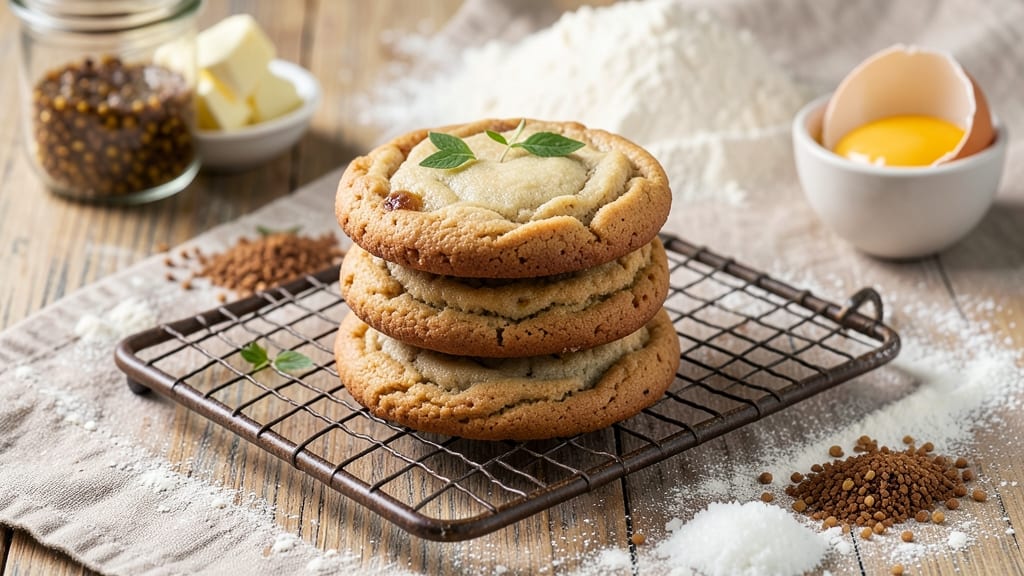
This Bearfoot Baker sugar cookie recipe delivers the signature chewy edges and crisp centers that make them legendary—without the fuss of traditional baking. The foil-wrapped technique ensures perfect texture every time, while vanilla bean and crushed cookies add that signature crunch.
I've baked dozens of batches, and this method never fails to impress.
The secret lies in the dough's balance of butter and sugar, which creates that signature tender yet sturdy texture. Rolling the dough to just 1/4-inch thickness guarantees even baking, while the foil wrapping during the first 10 minutes prevents over-browning.
Vanilla bean paste infuses deep flavor, and crushed cookies in the dough add that signature crunch.
By the time they emerge from the oven, you'll have cookies with golden edges, chewy centers, and pockets of vanilla bean and cookie crunch in every bite.
The aroma alone will have your kitchen smelling like a bakery, and the texture is impossible to resist—crisp enough to hold shape but tender enough to melt in your mouth.
Decorate with royal icing or keep them classic with a sprinkle of flaky salt. These cookies are perfect for holidays, gifts, or satisfying a sweet craving. Let's get baking—your taste buds will thank you.
Ingredients for bearfoot baker sugar cookie
These 12 ingredients create legendary Bearfoot Baker cookies with chewy centers and crunchy edges—no fancy tools needed.
| Ingredient | Amount | Notes |
|---|---|---|
| Unsalted Butter 🧈 | 1 cup | Cold, cubed for even dough texture |
| Granulated Sugar 🍚 | 1 ½ cups | Superfine preferred for smooth dough |
| Light Brown Sugar 🍚 | ½ cup | Packed, for chewy texture |
| Large Eggs 🥚 | 2 whole | Room temperature for even mixing |
| Vanilla Bean Paste 🌿 | 1 tbsp | Or 2 tsp vanilla extract |
| All-Purpose Flour 🌾 | 4 cups | Sifted, for light texture |
| Baking Soda 🧂 | ½ tsp | For lift and tenderness |
| Salt 🧂 | ½ tsp | Fine sea salt preferred |
| Crushed Sugar Cookies 🍪 | 1 ½ cups | Homemade or store-bought |
| Aluminum Foil 📄 | 1 sheet | For wrapping during baking |
| Royal Icing (optional) 🎨 | 1 cup | For decorating, store-bought or homemade |
| Flaky Sea Salt 🧂 | 1 tsp | For finishing, optional |
The butter and sugars are non-negotiable here. Crisco or vegetable shortening can replace half the butter if you're in a pinch, but the butter gives that signature tender bite. For the sugars, superfine sugar dissolves better, but regular granulated works if you pulse it in a food processor. I grab my butter from Whole Foods when it's on sale—look for the highest fat content possible. The vanilla bean paste? Nielsen-Massey is my go-to, but any high-quality paste will do. Pro tip: if you can't find vanilla bean paste, double the vanilla extract and add a pinch of ground vanilla bean seeds for depth.
No crushed cookies on hand? Toast leftover cookies and pulse them in a food processor until they're fine crumbs. For the flour, King Arthur or Gold Medal are my favorites—they bake up lighter. If you're gluten-free, swap in a 1:1 gluten-free flour blend, but expect slightly denser cookies. The baking soda and salt are simple but critical: baking powder won't work here. As for the foil, any heavy-duty foil will do—just make sure it's large enough to wrap your baking sheet completely. And if royal icing feels intimidating, store-bought white icing from the baking aisle works just as well.
Store the dough in an airtight container for up to 3 days—it actually improves with a day or two of resting. The baked cookies keep their texture for 5 days in a sealed container, but they're best enjoyed fresh. For freezing, cool completely, then layer with parchment paper between each batch. They'll keep for 3 months this way. I like to freeze them plain and add the royal icing after baking—less mess, more control. And if you're making these for gifts, cellophane bags with ribbon look extra special.
Why You'll Love This Recipe
- No Cream of Tartar Needed: I’ll admit, I used to stress over sour cream or cream of tartar for chewiness—but this recipe skips it entirely. The butter-to-sugar ratio and brown sugar’s moisture do all the work, giving you that perfect soft-yet-firm texture without extra fuss.
- Vanilla Bomb: That little jar of vanilla bean paste? Everything. It’s richer than extract, with actual flecks of vanilla that melt into the dough like little flavor surprises. Honestly, I’ve tried other sugar cookies since, and none hit the same.
- Holiday or Snack Attack: These bake up into thick, sturdy cookies that hold their shape—great for Christmas trees or gift boxes—but also disappear in minutes when I’m craving something sweet. (Yes, even on a Tuesday night.)
- Dollar Stretcher: A single batch yields 48 cookies, and the ingredients cost less than half what store-bought gourmet cookies do. The butter and sugar go a long way, and the leftovers? They last for days in an airtight container.
Step-by-step instructions for Bearfoot Baker sugar cookies
Here's how to make these legendary cookies with a perfect crunch and chewy center.
Cream the Butter and Sugars Together
In a stand mixer fitted with the paddle attachment, combine the 1 cup unsalted butter (cold, cubed) with the 1.5 cups granulated sugar and 0.5 cup light brown sugar. Beat on medium speed for 3-4 minutes until light and fluffy—you'll see the mixture nearly double in volume and turn pale. This step is crucial for creating that signature tender crumb.
I like to scrape down the sides of the bowl every 30 seconds to ensure even mixing. You're looking for a texture that's smooth and creamy, like thick whipped cream. If it feels too soft, chill the bowl in the freezer for 5 minutes—this helps prevent overmixing later when we add the flour.
Add Eggs and Vanilla for Rich Flavor
Add the 2 whole large eggs (room temperature) one at a time, mixing on low speed after each addition until fully incorporated. Then stir in the 1 tablespoon vanilla bean paste—this is where the magic happens for that authentic vanilla flavor. The dough should look smooth and slightly shiny at this point.
I always use vanilla bean paste instead of extract because it gives a more complex, natural vanilla flavor. If you don't have it, you can substitute with 2 teaspoons vanilla extract, but the flavor won't be quite the same. Make sure your eggs are at room temperature to prevent the butter from melting prematurely.
Mix in Dry Ingredients and Crushed Cookies
In a separate bowl, whisk together the 4 cups all-purpose flour, 0.5 teaspoon baking soda, and 0.5 teaspoon salt. Gradually add this mixture to the wet ingredients, mixing on low speed just until combined—you should still see some flour streaks. This prevents overdevelopment of gluten, which keeps your cookies tender.
Remove the bowl from the mixer and fold in the 1.5 cups crushed sugar cookies by hand using a silicone spatula. I like to press them gently into the dough so they're evenly distributed. The crushed cookies will add that signature crunch that makes these cookies so special. At this point, the dough will be thick and sticky—this is normal!
Shape and Wrap for Perfect Texture
Divide the dough into 4 equal portions (about 12 ounces each) and shape each into a log about 3 inches wide. Wrap each log tightly in the 1 sheet aluminum foil, twisting the ends to seal. This wrapping technique creates steam during baking, which gives you that perfect chewy center with crispy edges.
Place the wrapped dough logs on a baking sheet and refrigerate for at least 30 minutes (or up to 24 hours). This chilling step is essential—it firms up the butter and prevents the cookies from spreading too much in the oven. When ready to bake, preheat your oven to 350°F and bake for 15-18 minutes until golden brown.
Cool and Finish with Flaky Salt
Remove the cookies from the oven and let them cool on the baking sheet for 5 minutes before unwrapping. Transfer them to a wire rack to cool completely. The cookies will be soft and chewy when hot, but they'll firm up as they cool—this is exactly what you want!
Once completely cooled, sprinkle each cookie with a pinch of flaky sea salt for that perfect balance of sweet and salty. For extra decoration, you can use the 1 cup royal icing to pipe simple designs on top. These cookies are best enjoyed at room temperature, so let them sit for at least 1 hour before serving.
Pro Tips For Making Bearfoot Baker Sugar Cookie
- CREAM BUTTER AND SUGARS FIRST: I learned this the hard way—mixing the butter with sugars at room temperature (65°F) until light and fluffy (about 3-5 minutes) is non-negotiable. Cold butter means dense cookies, and Bearfoot’s recipe relies on that perfect spread. Use a stand mixer with the paddle attachment and don’t rush it—stop when the dough looks like it’s about to climb the bowl.
- WEIGH YOUR BROWN SUGAR: Pack that light brown sugar just enough to hold its shape when scooped—no need to ram it like you’re making a sandcastle. Too much packing = dry cookies; too little = sticky mess. A kitchen scale ensures consistency, but if you’re eyeballing, use a spoon to level it off. Trust me, your cookies will thank you when they hold their shape.
- CHILL THE DOUGH LONGER: Skip the 30-minute rest—wrap the dough in plastic and refrigerate for at least 2 hours (overnight is even better). This isn’t just about easier rolling; it’s about preventing cookies that spread into sad, flat pancakes. Cold dough = crisp edges, chewy centers, and the perfect texture Bearfoot’s recipe promises.
- USE A VANILLA BEAN PASTE SPARINGLY: That vanilla bean paste is potent—start with half the amount called for, then taste the dough. You want vanilla to shine, not overpower the buttery sweetness. If you’re using seeds, scrape them out first (they add texture, not flavor here) and save the paste for another recipe. Less is more with this stuff.
Best sauces and condiments for these flavors
Vanilla Bean Glaze
Elevate your cookies with a simple vanilla bean glaze made from ½ cup powdered sugar, 1 tbsp milk, and ½ tsp vanilla bean paste.
Whisk until smooth and drizzle over cooled cookies for a glossy finish. This glaze enhances the vanilla flavor without overpowering the cookie’s natural sweetness. 🌿
Salted Caramel Drizzle
For a gourmet touch, make a quick salted caramel drizzle by heating ½ cup granulated sugar in a saucepan until melted, then adding 2 tbsp heavy cream and 1 tbsp butter.
Stir in a pinch of flaky sea salt and drizzle over cookies while still warm. The salt enhances the caramel’s sweetness, creating a perfect balance.
Chocolate Ganache
Add richness with a dark chocolate ganache—melt ½ cup dark chocolate chips and 2 tbsp heavy cream in a microwave-safe bowl in 30-second intervals, stirring until smooth.
Drizzle over cookies and let set for 10 minutes before serving. The ganache adds a decadent contrast to the crunchy cookie texture.
Citrus Zest Twist
Brighten the flavor with a lemon or orange zest twist. Mix 1 tbsp powdered sugar with 1 tsp lemon or orange zest and a few drops of juice.
Sprinkle over cookies for a refreshing burst of citrus. This works especially well with the vanilla bean flavor, adding a bright, tangy contrast. 🍊
Spiced Honey Drizzle
For a warm, aromatic finish, heat 2 tbsp honey with ¼ tsp ground cinnamon and a pinch of cayenne pepper until smooth. Drizzle over cookies and let cool—the honey caramelizes slightly, adding a subtle spiced sweetness that pairs beautifully with the vanilla and crunch.
Nutrition facts
Frequently asked questions
Why does the dough need to be wrapped in foil?
The foil creates steam during baking, which gives these cookies their signature chewy centers with crisp edges. Without it, they'd bake too quickly on the outside while staying undercooked inside. The steam also helps maintain moisture, keeping them tender even after cooling.
Can I make these cookies without crushed cookies in the dough?
Yes! If you don't have crushed cookies, try 1.5 cups toasted nuts (like pecans or almonds) or 1 cup oatmeal for texture. The crunch is what makes these special, but they'll still be delicious. For a more subtle version, omit them entirely and add 1 extra tablespoon of vanilla extract instead.
How do I prevent the cookies from spreading too much?
Chilling the dough logs for at least 30 minutes before baking is key—it firms up the butter. Also, roll the dough to exactly 1/4-inch thickness and use a cookie cutter for even shapes. Bake on the middle rack at 350°F for 15-18 minutes—no longer, or they'll overbake.
What's the best way to store these cookies?
Keep them in an airtight container at room temperature for 5 days to maintain their texture. For longer storage, freeze them plain (unfrosted) for up to 3 months. Thaw at room temperature for 1-2 hours before adding decorations. The foil-wrapped technique actually helps them stay fresh longer!
Can I use this dough for cut-out shapes instead of logs?
Roll the dough to 1/4-inch thickness and cut with holiday cutters. Bake on parchment-lined sheets at 350°F for 10-12 minutes (small shapes) or 13-15 minutes (large shapes). The foil trick works best for logs, but these will still be delicious with crisp edges.